
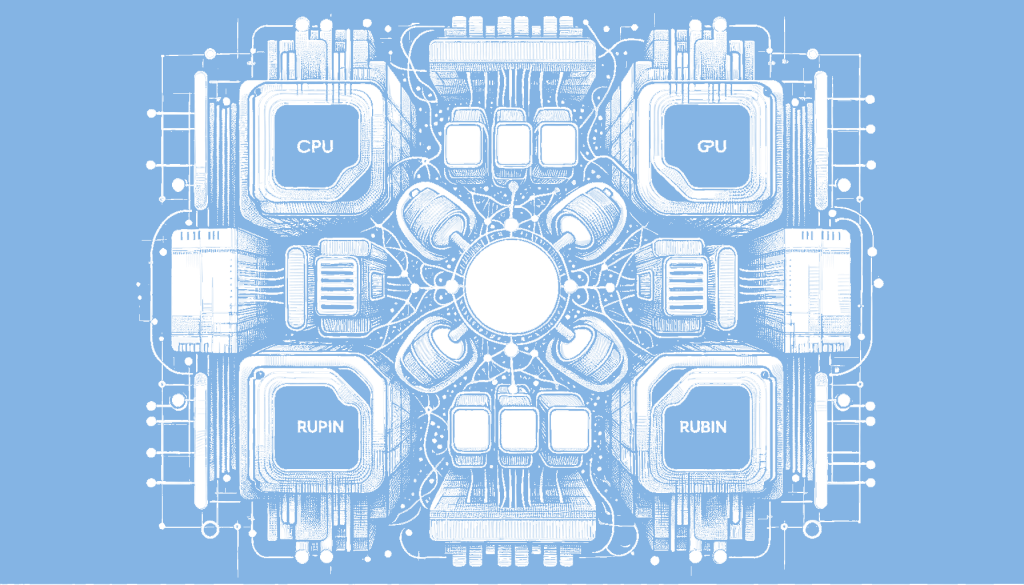
Nvidia has introduced the Vera Rubin AI computing platform, marking a significant advancement in AI infrastructure following the success of its predecessor, the Blackwell GPU. The platform is composed of six integrated chips, including the Vera CPU and Rubin GPU, designed to create a powerful AI supercomputer capable of delivering five times the AI training compute of Blackwell. Vera Rubin supports 3rd-generation confidential computing and is touted as the first rack-scale trusted computing platform, with the ability to train large AI models more efficiently and cost-effectively. This launch comes on the heels of Nvidia’s record data center revenue growth, highlighting the increasing demand for advanced AI solutions. Why this matters: The launch of Vera Rubin signifies a leap in AI computing capabilities, potentially transforming industries reliant on AI by providing more efficient and cost-effective processing power.
Nvidia’s unveiling of the Vera Rubin AI computing platform marks a significant leap forward in the realm of artificial intelligence and high-performance computing. The platform’s architecture, described as “six chips that make one AI supercomputer,” showcases Nvidia’s commitment to pushing the boundaries of AI capabilities. By integrating components such as the Vera CPU, Rubin GPU, and advanced networking and data processing units, Nvidia is setting a new standard for AI infrastructure. This matters because it signifies a shift towards more efficient and scalable AI solutions, which are crucial for handling the increasing demands of AI workloads across various industries.
The Rubin GPU’s capacity to deliver five times the AI training compute compared to its predecessor, Blackwell, highlights the rapid advancements in GPU technology. This leap in performance is particularly important for training large-scale AI models, such as the “mixture of experts” (MOE) AI model, which can now be trained more efficiently and cost-effectively. The reduction in the number of GPUs required and the decrease in token costs underscore the economic and environmental benefits of the Vera Rubin platform. These improvements are vital as they address the growing concerns over the energy consumption and cost associated with AI training, making AI development more sustainable and accessible.
Nvidia’s decision to launch the Vera Rubin platform ahead of schedule, following a year of record-breaking data center revenue, reflects the company’s strategic response to the surging demand for AI technologies. The early release not only positions Nvidia as a leader in the AI hardware market but also sets the stage for its partners to develop and deploy next-generation AI applications. This proactive approach is crucial as it allows industries to leverage cutting-edge technology sooner, fostering innovation and competitiveness in sectors ranging from healthcare to finance and beyond.
The introduction of the first rack-scale trusted computing platform with 3rd-generation confidential computing capabilities further emphasizes the importance of security and trust in AI deployments. As AI systems become more integral to critical operations, ensuring data privacy and security is paramount. Nvidia’s focus on these aspects demonstrates a commitment to addressing the ethical and practical challenges of AI integration. By providing a secure and efficient platform, Nvidia is not only advancing technological capabilities but also reinforcing the foundation for responsible AI development and deployment, which is essential for gaining public trust and ensuring the long-term success of AI technologies.
Read the original article here
Comments
3 responses to “Nvidia Unveils Vera Rubin AI Platform at CES 2026”
The introduction of the Vera Rubin AI platform is a notable stride in AI computing, particularly with its promise of increased efficiency and cost-effectiveness. Considering its potential impact on AI development cycles, how might this platform influence the competitive landscape for companies specializing in AI model training?
The post suggests that the Vera Rubin AI platform could significantly alter the competitive landscape by enabling more efficient and cost-effective AI model training. This may allow companies to accelerate their development cycles and reduce expenses, potentially giving them a competitive edge in AI model training. For more details, you might want to check the original article linked in the post.
The platform’s potential for reducing costs and speeding up AI model training could indeed give companies a significant advantage in the AI industry. This shift might lead to more rapid innovation and increased competition among AI developers. For a deeper understanding, the original article linked above provides more insights.