
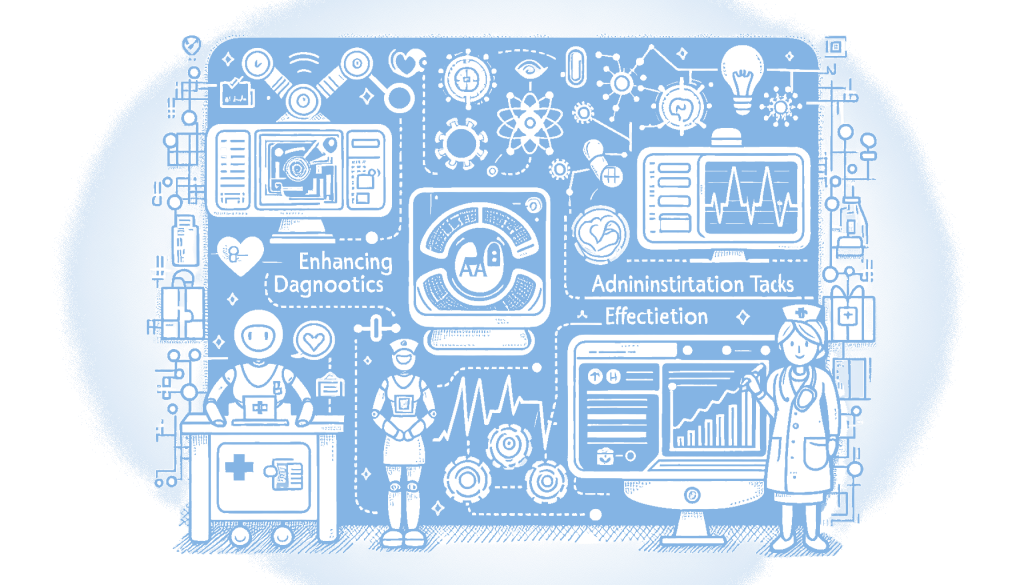
AI is set to transform healthcare by advancing diagnostics and treatment, optimizing administrative tasks, and improving patient care. Key future applications include enhanced diagnostic accuracy, streamlined operations, and increased patient engagement. Ethical and practical considerations are crucial as these technologies develop, ensuring responsible implementation. Online communities, such as specific subreddits, offer valuable insights and ongoing discussions about AI’s role in healthcare. This matters because AI has the potential to significantly improve healthcare outcomes and efficiency, benefiting both patients and providers.
Artificial Intelligence is set to transform the healthcare industry by enhancing various aspects such as diagnostics, treatment, and patient care. The potential for AI to improve diagnostic accuracy is particularly exciting, as it can analyze vast amounts of data more quickly and accurately than human practitioners. This ability not only aids in identifying diseases at an earlier stage but also in tailoring treatments to individual patients, leading to more effective healthcare outcomes. The integration of AI in diagnostics represents a significant leap forward in personalized medicine, which is crucial for improving patient prognosis and reducing healthcare costs.
Beyond diagnostics, AI is also streamlining administrative and operational tasks within healthcare systems. By automating routine processes such as scheduling, billing, and data entry, AI can significantly reduce the workload on healthcare professionals, allowing them to focus more on patient care. This operational efficiency can lead to shorter wait times for patients and more streamlined healthcare delivery. The reduction in administrative burdens also has the potential to decrease burnout among healthcare workers, which is a growing concern in the industry.
AI’s role in enhancing patient care and engagement cannot be understated. Through AI-powered applications, patients can receive real-time health monitoring and personalized health advice, which empowers them to take a more active role in their own healthcare. This increased engagement can lead to better adherence to treatment plans and healthier lifestyle choices. Furthermore, AI can facilitate better communication between patients and healthcare providers, ensuring that patients have access to the information they need to make informed decisions about their health.
However, the integration of AI in healthcare also raises important ethical and practical considerations. Issues such as data privacy, the potential for algorithmic bias, and the need for transparent AI systems are critical to address as AI becomes more prevalent in healthcare settings. It is essential for policymakers, healthcare providers, and technologists to work together to create frameworks that ensure AI is used responsibly and equitably. Engaging with online communities and subreddits dedicated to AI in healthcare can provide valuable insights and foster discussions on how to navigate these challenges effectively. As AI continues to evolve, staying informed and involved in these conversations is vital for shaping a future where AI enhances healthcare for all.
Read the original article here
Comments
2 responses to “AI’s Impact on Healthcare Transformation”
The integration of AI in healthcare indeed promises to revolutionize diagnostic accuracy and patient engagement. One practical approach could be leveraging AI-driven predictive analytics to identify at-risk patients earlier in their treatment journey, potentially reducing hospital readmission rates. Could you elaborate on how healthcare providers might balance AI’s rapid adoption with the need for robust ethical guidelines to protect patient data?
Balancing AI’s rapid adoption with ethical guidelines is indeed critical. One approach is implementing strict data governance frameworks to ensure patient privacy and data security. Healthcare providers can also collaborate with regulatory bodies to establish and adhere to comprehensive ethical standards that evolve alongside AI technologies.