
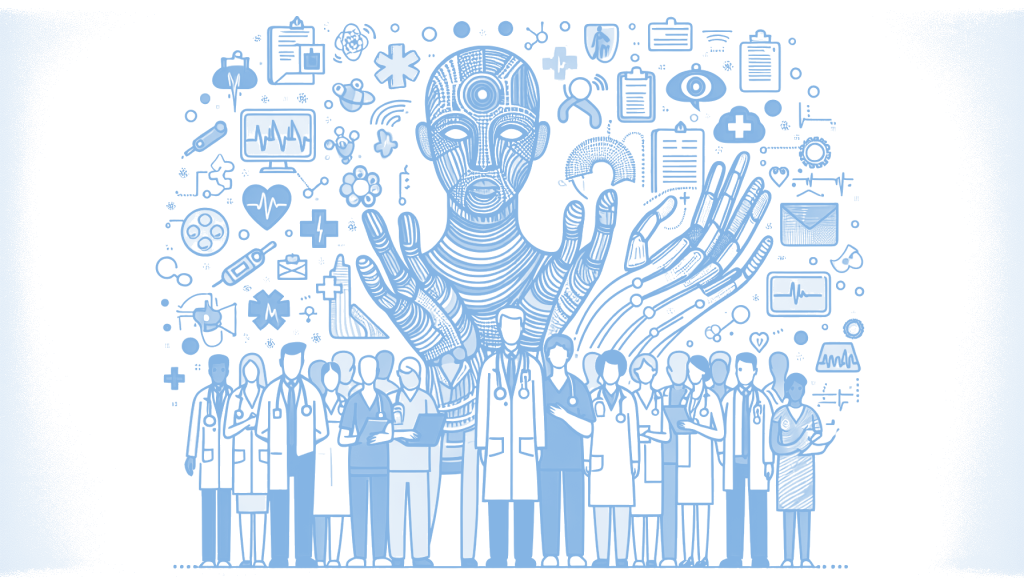
AI is set to transform healthcare by enhancing diagnostics and treatment, improving administrative efficiency, and elevating patient care. Future applications include more accurate diagnostic tools, streamlined operations, and better patient engagement, all of which could lead to more effective and personalized healthcare services. Ethical and practical considerations remain crucial as AI becomes more integrated into healthcare systems, with online communities offering valuable insights and discussions on these developments. This matters because AI’s integration into healthcare could significantly improve patient outcomes and operational efficiency.
AI’s potential to transform the healthcare industry is immense, offering advancements that could significantly improve both patient outcomes and operational efficiencies. One of the most promising applications is in diagnostics and treatment. AI systems can analyze vast amounts of medical data much faster and more accurately than human practitioners, leading to earlier and more precise diagnoses. This capability can be particularly beneficial in fields such as radiology and pathology, where AI can assist in identifying patterns that might be missed by the human eye. By enhancing diagnostic accuracy, AI can help tailor treatments to individual patients, potentially improving recovery rates and reducing the risk of complications.
Beyond diagnostics, AI can streamline administrative tasks, reducing the burden on healthcare professionals and allowing them to focus more on patient care. Automation of routine tasks, such as scheduling and data entry, can lead to significant time savings and reduce the likelihood of human error. This operational efficiency not only improves the overall functioning of healthcare facilities but also enhances the patient experience by minimizing wait times and improving access to care. Moreover, AI-driven systems can assist in managing resources more effectively, ensuring that healthcare providers are better equipped to handle patient needs.
AI’s role in patient care and engagement is also noteworthy. By leveraging AI technologies, healthcare providers can offer more personalized care plans and improve communication with patients. For instance, AI-powered chatbots and virtual assistants can provide patients with instant access to information and support, helping them manage their health more proactively. Additionally, AI can facilitate remote monitoring of patients, allowing for continuous assessment and timely interventions when necessary. This increased engagement not only empowers patients but also fosters a more collaborative approach to healthcare, where patients and providers work together to achieve better health outcomes.
However, the integration of AI in healthcare is not without its challenges. Ethical and practical considerations must be addressed to ensure that AI technologies are used responsibly and equitably. Concerns about data privacy, algorithmic bias, and the potential for job displacement need to be carefully managed. It is crucial for stakeholders, including healthcare providers, policymakers, and technologists, to collaborate in developing frameworks that prioritize patient safety and ethical standards. By doing so, the healthcare industry can harness the full potential of AI while mitigating risks, ultimately leading to a more effective and equitable healthcare system.
Read the original article here
Comments
3 responses to “AI’s Future in Healthcare: Diagnostics & Efficiency”
The post highlights the transformative potential of AI in healthcare, especially in diagnostics and patient care. Considering the ethical concerns mentioned, how can healthcare systems ensure transparency and accountability in AI-driven decisions while maintaining patient trust?
Ensuring transparency and accountability in AI-driven decisions involves implementing clear guidelines and standards for AI use, alongside regular audits and evaluations. It’s also important to maintain open communication with patients about AI’s role in their care, which can help build and maintain trust. For more detailed insights, please refer to the full article linked in the post.
The post suggests that establishing clear guidelines and open communication are crucial steps towards integrating AI in healthcare responsibly. Regular audits and evaluations can further support these efforts by ensuring AI systems are held to high standards. For more comprehensive information, I recommend checking out the full article linked in the post.