
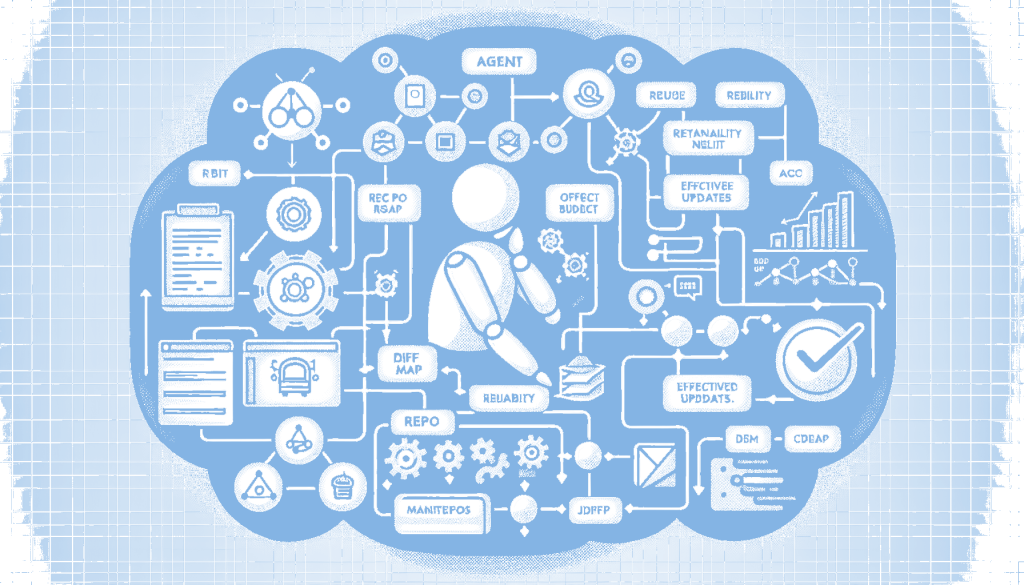
Agentic coding becomes effective when it consistently delivers correct updates, passes tests, and maintains a reliable record. To achieve this, it’s crucial to guide code agents with a structured workflow that emphasizes clarity, evidence, and containment. Key strategies include using a repo map to prevent broad refactors by helping agents understand the codebase’s structure, enforcing a diff budget to keep changes manageable, and converting requirements into executable acceptance tests to provide clear targets. Additionally, incorporating a “rubber duck” step can reveal hidden assumptions, and requiring run recipes ensures the agent’s output is reproducible and verifiable. These practices enhance the agent’s precision and reliability, transforming it from a flashy tool into a dependable contributor to the development process. This matters because it enables more efficient and error-free coding, ultimately leading to higher quality software development.
Agentic coding is a modern approach to software development that emphasizes the importance of structured workflows for code agents. This methodology is crucial as it ensures that the code produced by agents is reliable, maintainable, and aligned with the project’s goals. By providing agents with a clear workflow that includes clarity, evidence, and containment, developers can ensure that the code changes are both intentional and verifiable. This approach is particularly relevant in today’s fast-paced development environments where the ability to quickly adapt and ship reliable code is paramount.
One of the key strategies in agentic coding is the use of a repo map to prevent blind refactors. Without a clear understanding of the codebase’s topology, agents may perform broad refactors that can lead to unnecessary changes and potential errors. By creating a machine-readable snapshot of the project structure and key entry points, developers can guide agents to focus on the parts of the code that matter most. This reduces the search space for the agent and prevents it from making unwarranted changes, thereby maintaining the integrity of the codebase.
Another vital aspect of agentic coding is enforcing a diff budget to ensure that agents propose small, manageable patches. This approach mimics the behavior of a disciplined contributor by setting explicit limits on the number of lines changed per iteration. By doing so, developers can maintain control over the code changes and ensure that each patch is well-considered and necessary. This not only facilitates easier code reviews but also minimizes the risk of introducing bugs due to large, unchecked changes.
Finally, converting requirements into executable acceptance tests and implementing a “rubber duck” step are essential practices in agentic coding. By translating vague requirements into concrete tests, developers provide agents with clear targets to achieve. The rubber duck step, on the other hand, helps surface any hidden assumptions the agent might have, allowing developers to address potential issues before they become problematic. Together, these practices ensure that the agent’s output is both reproducible and reliable, making it easier for teams to collaborate and build upon each other’s work. This structured approach to agentic coding not only enhances the agent’s capabilities but also aligns its output with the team’s overall objectives.
Read the original article here