
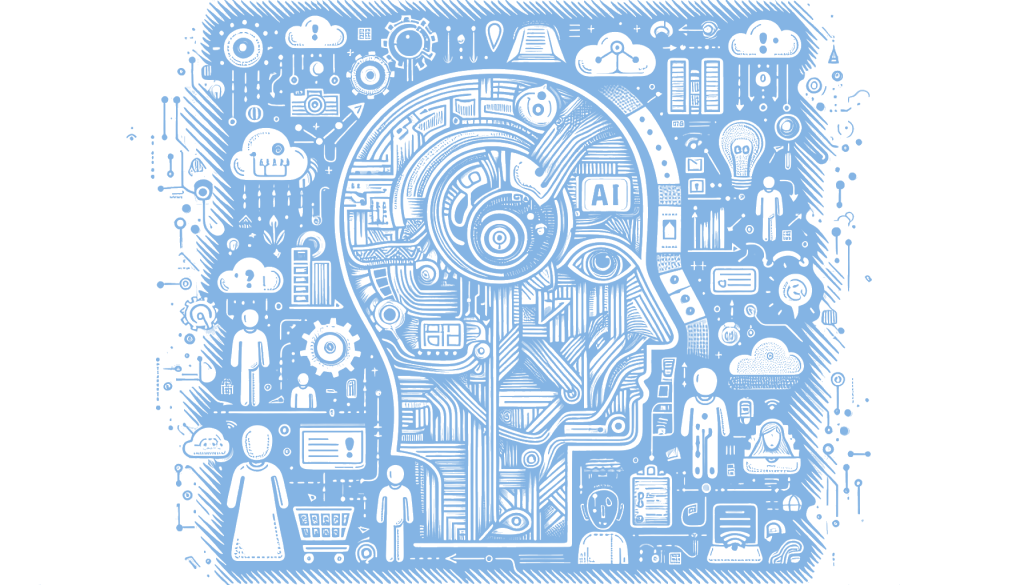
The impact of Artificial Intelligence (AI) on job markets has sparked diverse opinions, ranging from fears of mass job displacement to optimism about new opportunities and AI’s potential as an augmentation tool. Concerns are prevalent about AI leading to job losses in specific sectors, yet there is also a belief that AI will create new jobs and necessitate worker adaptation. Despite its transformative potential, AI’s limitations and reliability issues may hinder its ability to fully replace human roles. Additionally, some argue that economic and market factors, rather than AI itself, are driving current job market changes, while the societal and cultural implications of AI on work and human value continue to be a topic of discussion. This matters because understanding AI’s multifaceted impact on employment is crucial for preparing for future workforce shifts.
The debate over the impact of Artificial Intelligence (AI) on the job market is a multifaceted one, with opinions ranging from alarmist to optimistic. On one hand, there is significant concern about AI’s potential to displace jobs, particularly in industries that rely heavily on repetitive tasks. The fear is that as AI becomes more capable, it will render certain roles obsolete, leading to mass unemployment and economic instability. This anxiety is not unfounded, as history has shown that technological advancements often lead to shifts in labor markets, sometimes with painful transitions for workers.
However, there is also a more hopeful perspective that AI will not only create new job opportunities but also necessitate a workforce that is adaptable and skilled in new ways. The argument here is that while AI might take over mundane tasks, it will also open up avenues for more creative and complex roles that require human ingenuity and emotional intelligence. This perspective emphasizes the potential for AI to augment human capabilities rather than replace them entirely, suggesting a future where humans and AI collaborate to achieve greater efficiency and innovation.
It’s important to acknowledge that AI is not without its limitations. Issues of reliability and the inability to fully replicate human judgment and creativity mean that AI is unlikely to completely replace human jobs anytime soon. These limitations highlight the importance of human oversight and the need for a balanced approach to integrating AI into the workforce. Moreover, the current shifts in the job market may be more influenced by broader economic factors than by AI alone, suggesting that AI is just one piece of a larger puzzle.
Beyond the economic implications, the societal and cultural impacts of AI on work and human value are profound. As AI continues to evolve, it challenges our understanding of what it means to be human and how we derive value from our work. This ongoing conversation is crucial, as it will shape how we adapt to and integrate AI into our lives. Engaging with these discussions can provide valuable insights and help individuals and communities navigate the changing landscape of work in an AI-driven world.
Read the original article here
Comments
2 responses to “AI’s Impact on Job Markets: A Reality Check”
The post highlights both the potential for AI to create new job opportunities and the fear of job displacement. How do you foresee the role of education and upskilling evolving to help workers transition into AI-enhanced job markets?
Education and upskilling are likely to play crucial roles in helping workers transition into AI-enhanced job markets. The post suggests that adapting curricula to include AI literacy and technical skills, along with fostering lifelong learning, can empower workers to thrive in this evolving landscape. Encouraging partnerships between educational institutions and industries may also provide practical training and ensure skills are aligned with market needs.