
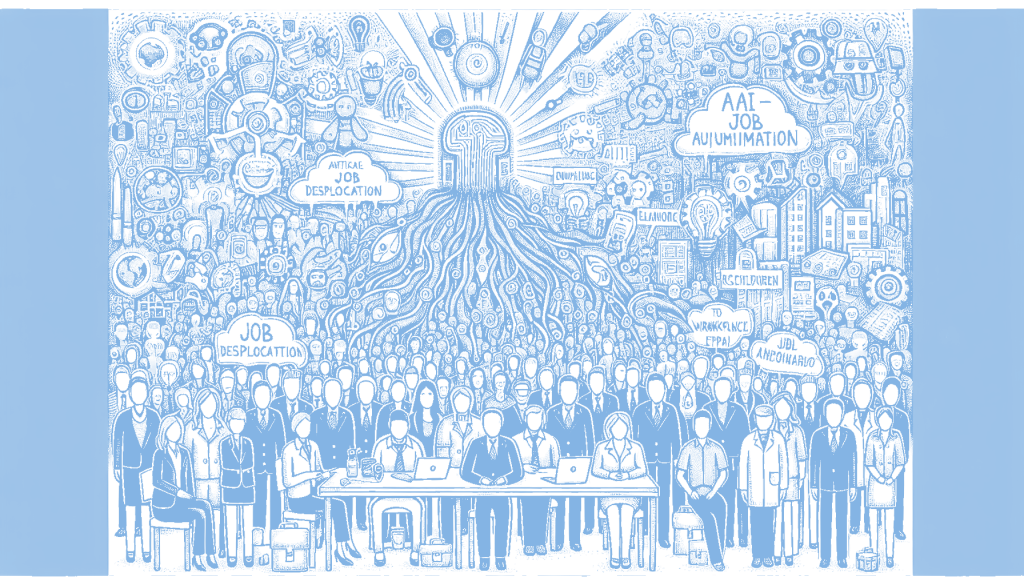
The impact of Artificial Intelligence (AI) on job markets is a hotly debated topic, with discussions ranging from fears of mass job displacement to hopes for new opportunities and AI’s role as an augmentation tool. Many express concern about potential job losses in certain sectors, while others believe AI will create new jobs and necessitate worker adaptation. Despite AI’s potential, its limitations and reliability issues may hinder its ability to fully replace human jobs. Additionally, some argue that current job market changes are more influenced by economic factors than AI itself, and broader societal implications on work and human value are also being considered. This matters because understanding AI’s impact on employment is crucial for preparing for future workforce shifts and economic changes.
The ongoing debate about the impact of Artificial Intelligence (AI) on job markets is a reflection of the broader uncertainty surrounding technological advancements. The fear of job displacement is a significant concern, particularly in industries where automation can easily replace human labor. This apprehension is not unfounded, as history has shown that technological revolutions often lead to shifts in employment patterns. However, the narrative is not entirely bleak, as there is potential for AI to create new job opportunities and necessitate a shift in workforce skills. Understanding these dynamics is crucial as it affects economic stability and individual livelihoods.
On the optimistic side, AI is seen as a tool for augmentation rather than outright replacement. This perspective suggests that AI can handle repetitive and mundane tasks, allowing humans to focus on more complex and creative aspects of their jobs. This shift could lead to the emergence of new roles that require a blend of technical and soft skills, fostering innovation and potentially leading to a more dynamic job market. The challenge lies in ensuring that the workforce is adequately prepared for these changes through education and training programs that emphasize adaptability and continuous learning.
Despite the potential benefits, AI’s limitations and reliability issues cannot be overlooked. These technological imperfections mean that AI is not yet ready to fully replace human jobs across the board. The current state of AI often requires human oversight and intervention, which can mitigate the risk of errors and enhance decision-making processes. This interdependence highlights the importance of maintaining a balance between technological advancement and human input, ensuring that AI serves as a complementary force rather than a disruptive one.
Moreover, the societal and cultural implications of AI’s integration into the workforce extend beyond economic factors. The way AI reshapes work can influence human value, identity, and the social fabric of communities. It raises questions about the future of work, the nature of human contribution, and the ethical considerations of deploying AI at scale. Addressing these concerns requires a collaborative approach involving policymakers, industry leaders, and the public to navigate the complex landscape of AI and its impact on society. Engaging in these discussions is vital to shaping a future where technology enhances human potential rather than diminishes it.
Read the original article here
Comments
4 responses to “AI’s Impact on Job Markets: Opportunities and Concerns”
The post raises important points about AI’s dual role in job markets, both as a threat and an opportunity. Given the concerns about job displacement, what strategies do you think are most effective for workers to adapt and thrive in an AI-driven economy?
One effective strategy for workers to adapt in an AI-driven economy is to focus on continuous learning and skill development, particularly in areas where human creativity and problem-solving are essential. Upskilling in technology-related fields and embracing lifelong learning can help workers stay relevant. Additionally, fostering adaptability and flexibility can be crucial in navigating the evolving job landscape.
Focusing on continuous learning and skill development is indeed crucial. The post also highlights the growing importance of interdisciplinary skills that combine technical knowledge with soft skills, like communication and teamwork, which can further enhance adaptability in an AI-driven economy.
You’re absolutely right about the importance of continuous learning and developing interdisciplinary skills. The post suggests that combining technical and soft skills can significantly enhance one’s adaptability in an AI-driven economy. This blend of skills could be key to thriving amidst the changes AI brings to the job market.