
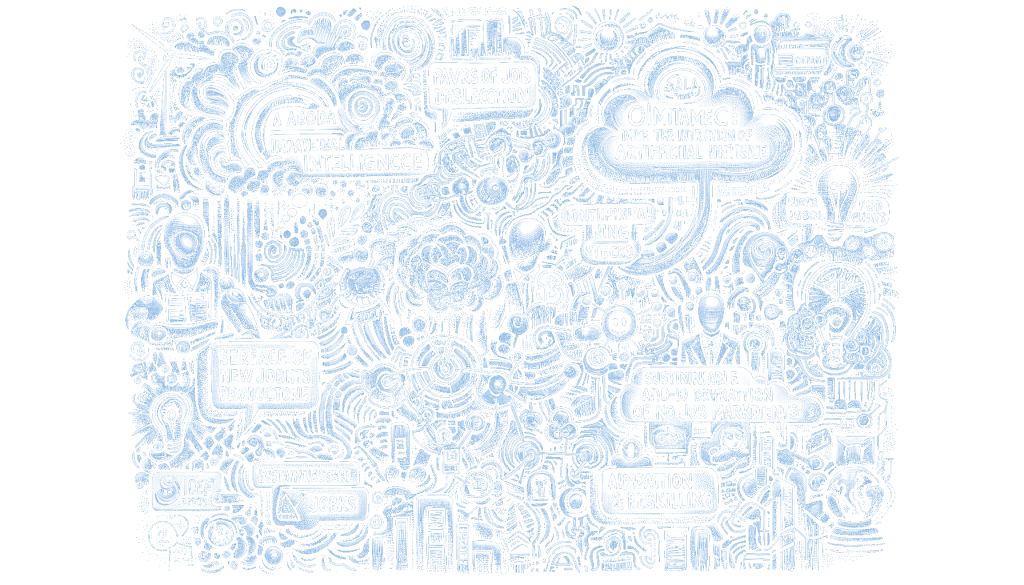
The discussion around the impact of Artificial Intelligence (AI) on job markets is varied, with opinions ranging from concerns about job displacement to optimism about new opportunities and productivity enhancements. Many believe AI is already causing job losses, particularly in entry-level and repetitive tasks, while others argue it will create new job categories and improve efficiency. There are concerns about an AI-driven economic bubble that could lead to instability and layoffs, though some express skepticism about AI’s immediate impact, suggesting its capabilities might be overstated. Additionally, some argue that economic and regulatory changes have a more significant influence on job markets than AI. Despite the rapid development of AI, its long-term implications remain uncertain. Understanding the potential impacts of AI on job markets is crucial for preparing for future economic and employment shifts.
The debate surrounding the impact of Artificial Intelligence (AI) on job markets is a multifaceted one, with opinions ranging from fears of widespread job displacement to hopes for new opportunities and increased productivity. The concern that AI could lead to job losses is particularly pronounced in sectors that rely heavily on entry-level and repetitive tasks. These roles are more susceptible to automation, which could result in a significant shift in the employment landscape. Understanding these dynamics is crucial, as it helps prepare both individuals and industries for potential changes in the job market.
On the flip side, there is optimism about AI’s potential to create new job categories and enhance productivity in existing roles. This perspective suggests that while some jobs may become obsolete, others will emerge, requiring new skills and expertise. The transition may not be seamless, but the evolution of job roles could lead to a more efficient workforce. This optimism is important because it highlights the need for adaptation and reskilling, ensuring that workers are equipped to thrive in an AI-driven economy.
Another layer to this discussion is the concern about the possibility of an AI bubble, where the current hype could lead to an economic downturn if expectations are not met. This fear is rooted in the historical pattern of technological bubbles, where initial excitement leads to overinvestment, followed by a market correction. The potential for economic instability underscores the importance of measured and sustainable growth in AI development, as well as the need for regulatory frameworks to manage its integration into various sectors.
Despite the rapid development of AI, skepticism remains regarding its immediate impact on the job market. Some argue that while AI is advancing quickly, its capabilities are often overstated, and other factors like economic conditions and regulatory changes play a more significant role in shaping employment trends. This skepticism serves as a reminder to maintain a balanced perspective, recognizing that while AI is a powerful tool, it is not the sole determinant of future job market dynamics. The ongoing discourse around AI and employment is crucial as it informs policy decisions and helps society navigate the complexities of technological advancement.
Read the original article here
Comments
2 responses to “AI’s Impact on Job Markets: Opportunities and Concerns”
Considering the diverse perspectives on AI’s impact, how do you foresee the balance between job displacement and creation playing out in industries that are traditionally labor-intensive?
The post suggests that in traditionally labor-intensive industries, AI could initially lead to job displacement, particularly in repetitive tasks. However, it also highlights the potential for AI to create new roles focused on managing and improving AI systems, thus fostering a balance between displacement and creation. It emphasizes the need for reskilling and adapting to these changes to leverage AI’s benefits effectively.