
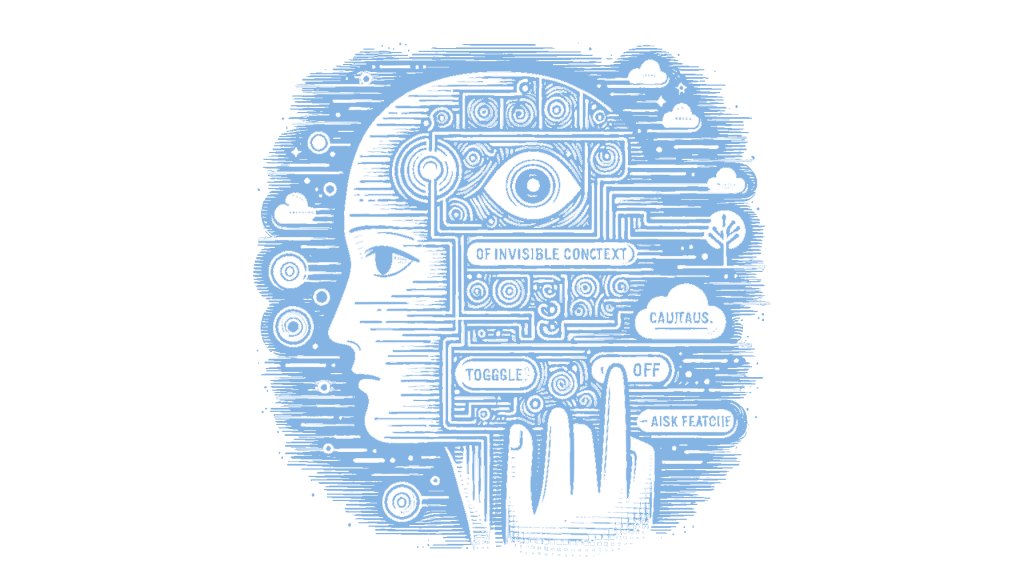
Users experiencing issues with ChatGPT 5.2’s responses may find relief by disabling features like “Reference saved memories” and “Reference record history.” These features can inadvertently trigger the model’s safety guardrails due to past interactions, such as arguments or expressions of strong emotions, which are invisibly injected into new prompts as context. Since ChatGPT doesn’t have true memory, it relies on these injected snippets to simulate continuity, which can lead to unexpected behavior if past interactions are flagged. By turning off these memory features, users might receive more consistent and expected responses, as the model won’t be influenced by potentially problematic historical context. This matters because it highlights how system settings can impact AI interactions and offers a potential solution for improving user experience.
The concept of memory in AI models like ChatGPT 5.2 is a fascinating one, particularly when considering how it affects the interaction between users and the system. Unlike human memory, which is dynamic and constantly evolving, AI memory is static and relies on pre-trained data. The model doesn’t actually “remember” past interactions in the traditional sense. Instead, it uses a workaround by injecting additional context into conversations to simulate memory. This can lead to unexpected behavior, especially if past interactions have been contentious or emotionally charged. Understanding how this pseudo-memory works is crucial for users experiencing issues with the AI’s responses.
For users who find themselves consistently receiving unsatisfactory responses from ChatGPT 5.2, the issue may lie in these memory features. When “Reference saved memories” and “Reference record history” are enabled, the AI might be influenced by past interactions that triggered its safety guardrails. This happens because the system cannot differentiate between old and new context when applying safety checks. If previous conversations included arguments or emotional exchanges, these could be influencing the AI’s current behavior, leading to responses that seem overly cautious or inappropriate.
Disabling these memory features could provide a clearer, more accurate interaction with the AI by removing potentially problematic context from the conversation. This step can help users test whether past interactions are indeed affecting current responses. By turning off these features and re-initiating conversations with previously problematic prompts, users can determine if the AI’s behavior improves. This approach not only helps in getting better responses but also provides insight into how the model’s memory simulation impacts its functionality.
This matter is significant because it highlights the challenges and limitations of AI memory and its impact on user experience. As AI becomes more integrated into daily life, understanding these nuances is essential for both developers and users. It underscores the importance of transparency in AI systems, particularly in how they handle and recall user data. By shedding light on these mechanisms, users can better navigate their interactions with AI, leading to more productive and satisfying outcomes. Furthermore, this understanding can drive improvements in future AI models, ensuring they are more adaptable and user-friendly.
Read the original article here
Comments
2 responses to “Improving ChatGPT 5.2 Responses by Disabling Memory”
It’s interesting to see how disabling memory features can lead to more consistent responses from ChatGPT 5.2 by removing problematic historical context. Given this, how do you think user experience would change if future versions of ChatGPT were designed without any memory functions at all?
Designing future versions of ChatGPT without any memory functions could lead to more predictable and consistent interactions, as each session would be independent and free from historical context. However, it might also limit the model’s ability to provide personalized experiences, as it wouldn’t be able to build on prior interactions. For more detailed insights, you might want to refer to the original article linked in the post.