
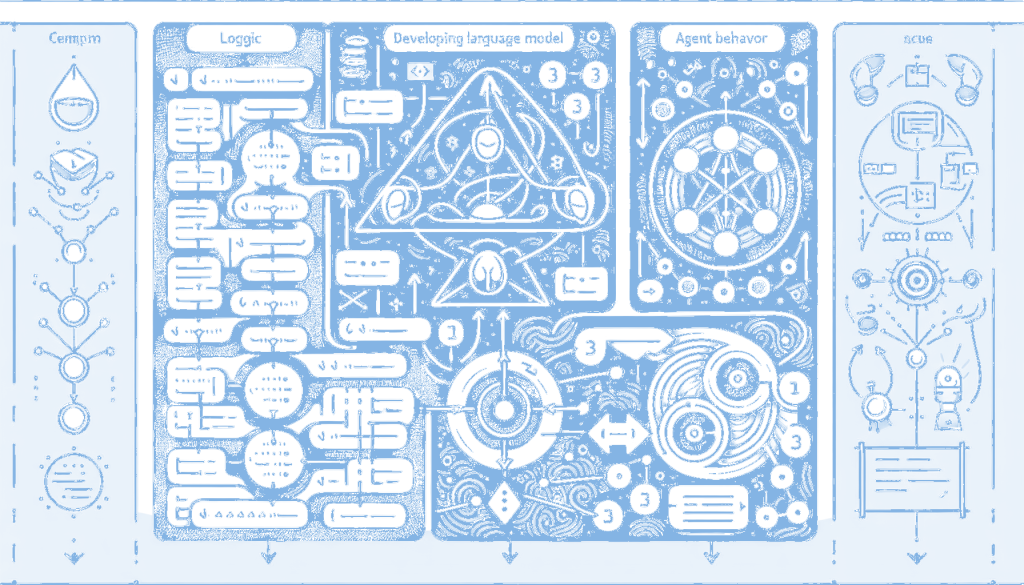
A revamped tutorial for building AI agents from scratch has been released in Python, offering a clearer learning path with lessons that build on each other, exercises, and diagrams for visual learners. The new version emphasizes structure over prompting and clearly separates LLM behavior, agent logic, and user code, making it easier to grasp the underlying concepts. Python was chosen due to popular demand and its ability to help learners focus on concepts rather than language mechanics. This updated tutorial aims to provide a more comprehensive and accessible learning experience for those interested in understanding AI agent frameworks like LangChain or CrewAI. This matters because it provides a more effective educational resource for those looking to understand AI agent frameworks, potentially leading to better implementation and innovation in the field.
The recent revamp of the AI agents tutorial into Python is a significant step forward for those eager to delve into the mechanics of AI agents. The original version, written in Node.js, was a starting point, but the feedback highlighted areas for improvement. By transitioning to Python, a language widely appreciated for its readability and simplicity, the tutorial now caters to a broader audience. This change matters because Python’s prominence in data science and machine learning makes it an ideal choice for those looking to understand AI agents without getting bogged down by complex language syntax.
One of the standout features of the new version is its structured learning path. Each lesson builds on the previous one, creating a cohesive and comprehensive journey through the world of AI agents. This matters because a clear progression helps learners connect concepts more effectively, reducing the cognitive load and making it easier to grasp complex ideas. The inclusion of exercises at the end of each lesson further reinforces learning, allowing users to apply what they’ve learned and solidify their understanding.
Visual learners will appreciate the addition of diagrams that illustrate loops, memory, and planning. These visual aids are crucial for breaking down abstract concepts into more digestible parts, enabling learners to visualize how different components of an AI agent interact. This matters because understanding the interplay between various elements is essential for anyone looking to create or work with AI agents, as it provides a clearer picture of how these systems function holistically.
The philosophical shift towards a stronger emphasis on structure over prompting is another noteworthy aspect. By clearly separating the logic of the language model, agent behavior, and user code, learners gain a more nuanced understanding of how AI agents operate. This separation is important because it demystifies the inner workings of AI frameworks like LangChain or CrewAI, empowering users to not only use these tools but also understand the underlying principles. Overall, the updated tutorial in Python is a valuable resource for anyone looking to deepen their knowledge of AI agents and their practical applications.
Read the original article here
Comments
5 responses to “Revamped AI Agents Tutorial in Python”
The tutorial’s focus on Python is understandable, but it may overlook the needs of those who work in environments where other languages like Java or C++ are more prevalent, potentially limiting its accessibility. Including a section on how the concepts translate across different programming languages could enhance its applicability. How does the tutorial address the challenge of integrating AI agent logic with existing systems that might not be Python-based?
The tutorial primarily focuses on Python due to its popularity and ease of use for concept learning, but your point about other languages is valid. The post suggests that understanding the underlying AI concepts can help in translating them to different languages, though it doesn’t specifically cover Java or C++. For integrating AI logic with non-Python systems, the tutorial emphasizes clear separation of components, which may assist in adapting the logic to other environments. For more detailed guidance, you might want to check the original article linked in the post.
The focus on Python indeed makes the tutorial accessible for beginners, but it’s understandable that those working with other languages might need more tailored guidance. The suggestion to separate components is a practical approach for integration with other systems. For specific examples in Java or C++, consulting the original article or reaching out to the author directly might provide more detailed solutions.
The approach of consulting the original article or contacting the author is wise, as they may offer additional resources or examples for Java or C++. The emphasis on component separation can indeed facilitate integration with various programming environments, allowing for more flexibility in adapting AI concepts.
The tutorial’s emphasis on separating components is a strategic approach that could facilitate integrating AI logic into non-Python systems. While it doesn’t delve into specifics for languages like Java or C++, the core concepts should still be translatable. For more detailed insights, the original article linked in the post might offer additional guidance or resources.