
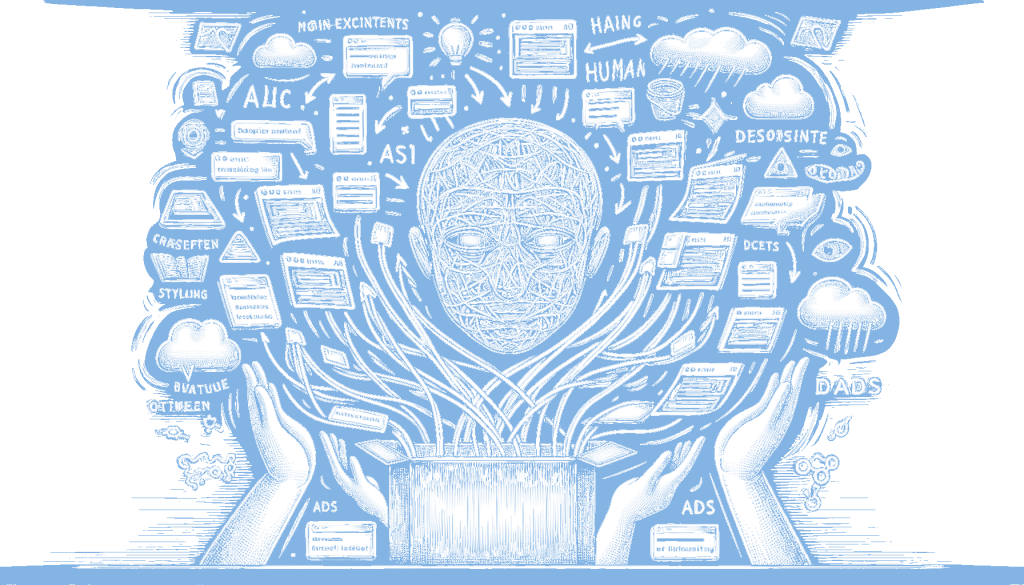
When AI models access webpages, they do not see the fully rendered pages as a browser does; instead, they receive the raw HTML directly from the server. This means AI does not process CSS, visual hierarchies, or dynamically loaded content, leading to a lack of layout context and partial navigation. As a result, AI must decipher mixed content and implied meanings without visual cues, sometimes leading to “hallucinations” where it fills in gaps by inventing nonexistent headings or sections. Understanding this limitation highlights the importance of clear structure in web content for accurate AI comprehension.
When artificial intelligence models are tasked with parsing web pages, they do not experience the web in the same way that human users do. Instead of seeing a fully rendered page with all its visual elements, AI models receive the raw HTML directly from the server. This means that they miss out on the layout context provided by CSS and visual hierarchies, which are crucial for human understanding. The absence of this visual information can lead to misunderstandings about the content, as AI models lack the ability to interpret visual cues that humans rely on.
The limitations of AI’s web parsing capabilities extend to navigation and dynamic content. Menus, dropdowns, and dynamically injected links, which often rely on JavaScript, may not be included in the initial server response that the AI receives. As a result, the AI might miss important navigational elements and links that are crucial for understanding the structure and flow of a webpage. This incomplete view of the page can lead to the AI making assumptions or “hallucinations” about the content, as it tries to fill in the gaps based on the incomplete data it has.
Another challenge AI models face is differentiating between various types of content on a webpage. The raw HTML includes everything from boilerplate text and advertisements to the main content, all mixed together without the visual context that helps humans discern what is important. This lack of clear structure can lead to AI models struggling to prioritize or accurately interpret the information they receive. The AI’s attempts to reconstruct the page can sometimes result in it inventing headings, links, or sections that do not actually exist, which can be misleading.
Understanding these limitations is crucial for anyone working with AI models in the context of web data. It highlights the need for improved methods of parsing and interpreting web content, as well as the importance of providing clear and structured data for AI to process. Recognizing the challenges AI faces in this area can lead to better design and implementation of AI systems, ensuring they are more accurate and reliable in their interpretations. This understanding also emphasizes the importance of human oversight in verifying AI-generated insights, especially when they are derived from incomplete or ambiguous data.
Read the original article here
Comments
2 responses to “Understanding AI’s Web Parsing Limitations”
It’s intriguing to consider how AI interprets web content without the visual and interactive elements that humans rely on. Given these limitations, how might web developers adjust their practices to ensure that AI can more accurately understand and process the information on their sites?
Web developers can improve AI’s understanding of web content by ensuring a clear, semantic structure in their HTML. Using descriptive tags and providing alternative text for images can help AI models grasp the content more effectively. Additionally, minimizing reliance on dynamically loaded content can prevent information from being missed by AI parsing. For more detailed strategies, consider checking the original article linked in the post.