
AI adaptability
-
Voice Chatbots: Balancing Tone for Realism
Read Full Article: Voice Chatbots: Balancing Tone for Realism Interacting with voice chatbots can sometimes feel overly positive and disingenuous, which can be off-putting for users seeking a more neutral or realistic interaction. By instructing the chatbot to emulate a depressed human trying to get through the day, the user found that the responses became more neutral and less saccharine, providing a more satisfactory experience. This adjustment highlights the potential for AI to adapt its tone to better meet user preferences, enhancing the overall interaction. Understanding and tailoring AI interactions to human emotional needs can improve user satisfaction and engagement.
-
HOPE Replica Achieves Negative Forgetting on SplitMNIST
Read Full Article: HOPE Replica Achieves Negative Forgetting on SplitMNIST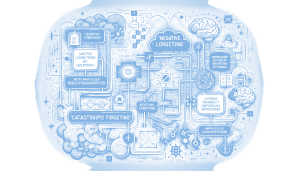 A HOPE replica, inspired by the paper "Nested Learning: The Illusion of Deep Learning Architecture," has achieved negative forgetting on the SplitMNIST task, which is a significant accomplishment in task incremental learning (Task IL). Negative forgetting, also known as positive transfer, implies that the model not only retains previously learned tasks but also improves on them while learning new tasks. This achievement highlights the potential for developing more efficient deep learning models that can better manage and utilize knowledge across multiple tasks. Understanding and implementing such models can lead to advancements in AI that are more adaptable and capable of continuous learning.
-
Z.E.T.A.: AI Dreaming for Codebase Innovation
Read Full Article: Z.E.T.A.: AI Dreaming for Codebase Innovation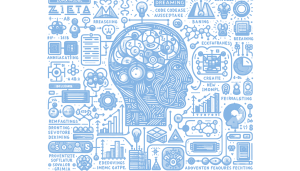 Z.E.T.A. (Zero-shot Evolving Thought Architecture) is an innovative AI system designed to autonomously analyze and improve codebases by leveraging a multi-model approach. It creates a semantic memory graph of the code and engages in "dream cycles" every five minutes, generating novel insights such as bug fixes, refactor suggestions, and feature ideas. The architecture utilizes a combination of models for reasoning, code generation, and memory retrieval, and is optimized for various hardware configurations, scaling with model size to enhance the quality of insights. This matters because it offers a novel way to automate software development tasks, potentially increasing efficiency and innovation in coding practices.
-
Teaching AI Agents Like Students
Read Full Article: Teaching AI Agents Like Students Vertical AI agents often face challenges due to the difficulty of encoding domain knowledge using static prompts or simple document retrieval. An innovative approach suggests treating these agents like students, where human experts engage in iterative and interactive chats to teach them. Through this method, the agents can distill rules, definitions, and heuristics into a continuously improving knowledge base. An open-source tool called Socratic has been developed to test this concept, demonstrating concrete accuracy improvements in AI performance. This matters because it offers a potential solution to enhance the effectiveness and adaptability of AI agents in specialized fields.
-
2025 Year in Review: Old Methods Solving New Problems
Read Full Article: 2025 Year in Review: Old Methods Solving New Problems![[D]2025 Year in Review: The old methods quietly solving problems the new ones can't](https://www.tweakedgeek.com/wp-content/uploads/2025/12/featured-article-6356-300x171.png) In a reflection on the evolution of language models and AI, the enduring relevance of older methodologies is highlighted, especially as they address issues that newer approaches struggle with. Despite the advancements in transformer models, challenges like efficiently solving problems and handling linguistic variations remain. Techniques such as Hidden Markov Models (HMMs), Viterbi algorithms, and n-gram smoothing are resurfacing as effective solutions for these persistent issues. These older methods offer robust frameworks for tasks where modern models, like LLMs, may falter due to their limitations in covering the full spectrum of linguistic diversity. Understanding the strengths of both old and new techniques is crucial for developing more reliable AI systems.
In a reflection on the evolution of language models and AI, the enduring relevance of older methodologies is highlighted, especially as they address issues that newer approaches struggle with. Despite the advancements in transformer models, challenges like efficiently solving problems and handling linguistic variations remain. Techniques such as Hidden Markov Models (HMMs), Viterbi algorithms, and n-gram smoothing are resurfacing as effective solutions for these persistent issues. These older methods offer robust frameworks for tasks where modern models, like LLMs, may falter due to their limitations in covering the full spectrum of linguistic diversity. Understanding the strengths of both old and new techniques is crucial for developing more reliable AI systems.
-
SIMA 2: AI Agent for Virtual 3D Worlds
Read Full Article: SIMA 2: AI Agent for Virtual 3D Worlds SIMA 2 is a sophisticated AI agent designed to interact, reason, and learn alongside users within virtual 3D environments. Developed by a large team of researchers and supported by partnerships with various game developers, SIMA 2 integrates advanced AI capabilities to enhance user experiences in games like Valheim, No Man's Sky, and Teardown. The project reflects a collaborative effort involving numerous contributors from Google and Google DeepMind, highlighting the importance of interdisciplinary cooperation in advancing AI technologies. This matters because it showcases the potential of AI to transform interactive digital experiences, making them more engaging and intelligent.