
AI tools
-
GLM 4.7: Top Open Source Model in AI Analysis
Read Full Article: GLM 4.7: Top Open Source Model in AI Analysis In 2025, the landscape of local Large Language Models (LLMs) has evolved significantly, with Llama AI technology leading the charge. The llama.cpp has become the preferred choice for many users due to its superior performance, flexibility, and seamless integration with Llama models. Mixture of Experts (MoE) models are gaining traction for their ability to efficiently run large models on consumer hardware, balancing performance with resource usage. Additionally, new local LLMs are emerging with enhanced capabilities, particularly in vision and multimodal applications, while Retrieval-Augmented Generation (RAG) systems are helping simulate continuous learning by incorporating external knowledge bases. These advancements are further supported by investments in high-VRAM hardware, enabling more complex models on consumer machines. This matters because it highlights the rapid advancements in AI technology, making powerful AI tools more accessible and versatile for a wide range of applications.
-
12 Free AI Agent Courses: CrewAI, LangGraph, AutoGen
Read Full Article: 12 Free AI Agent Courses: CrewAI, LangGraph, AutoGen Python remains the leading programming language for machine learning due to its extensive libraries and user-friendly nature. However, other languages like C++, Julia, R, Go, Swift, Kotlin, Java, Rust, Dart, and Vala are also utilized for specific tasks where performance or platform-specific requirements are critical. Each language offers unique advantages, such as C++ for performance-critical tasks, R for statistical analysis, and Swift for iOS development. Understanding multiple programming languages can enhance one's ability to tackle diverse machine learning challenges effectively. This matters because diversifying language skills can optimize machine learning solutions for different technical and platform demands.
-
Streamlining ML Deployment with Unsloth and Jozu
Read Full Article: Streamlining ML Deployment with Unsloth and Jozu Machine learning projects often face challenges during deployment and production, as training models is typically the easier part. The process can become messy with untracked configurations and deployment steps that work only on specific machines. By using Unsloth for training, and tools like Jozu ML and KitOps for deployment, the workflow can be streamlined. Jozu treats models as versioned artifacts, while KitOps facilitates easy local deployment, making the process more efficient and organized. This matters because simplifying the deployment process can significantly reduce the complexity and time required to bring ML models into production, allowing developers to focus on innovation rather than logistics.
-
AI Tools Directory as Workflow Abstraction
Read Full Article: AI Tools Directory as Workflow Abstraction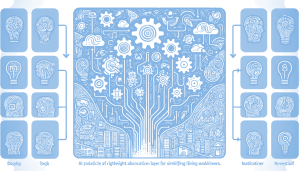 As AI tools become more fragmented, the challenge shifts from accessing tools to orchestrating them into repeatable workflows. While most AI directories focus on discovery and categorization, they often lack a persistence layer for modeling tool combinations in real-world tasks. etooly.eu addresses this by adding an abstraction layer, turning directories into lightweight workflow registries where workflows are represented as curated tool compositions for specific tasks. This method emphasizes human-in-the-loop workflows, enhancing cognitive orchestration by reducing context switching and improving repeatability for knowledge workers and creators, rather than replacing automation frameworks. Understanding this approach is crucial for optimizing the integration and utilization of AI tools in various workflows.
-
The 2026 AI Reality Check: Foundations Over Models
Read Full Article: The 2026 AI Reality Check: Foundations Over Models The future of AI development hinges on the effective implementation of MLOps, which necessitates a comprehensive suite of tools to manage various aspects like data management, model training, deployment, monitoring, and ensuring reproducibility. Redditors have highlighted several top MLOps tools, categorizing them for better understanding and application in orchestration and workflow automation. These tools are crucial for streamlining AI workflows and ensuring that AI models are not only developed efficiently but also maintained and updated effectively. This matters because robust MLOps practices are essential for scaling AI solutions and ensuring their long-term success and reliability.
-
ModelCypher: Exploring LLM Geometry
Read Full Article: ModelCypher: Exploring LLM Geometry![ModelCypher: A toolkit for the geometry of LLMs (open source) [P]](https://www.tweakedgeek.com/wp-content/uploads/2025/12/featured-article-6349-300x171.png) ModelCypher is an open-source toolkit designed to explore the geometry of small language models, challenging the notion that these models are inherently black boxes. It features cross-architecture adapter transfer and jailbreak detection using entropy divergence, implementing methods from over 46 recent research papers. Although the hypothesis that Wierzbicka's "Semantic Primes" would show unique geometric invariance was disproven, the toolkit reveals that distinct concepts have a high convergence across different models. The tools are documented with analogies to aid understanding, though they primarily provide raw metrics rather than user-friendly outputs. This matters because it provides a new way to understand and potentially improve language models by examining their geometric properties.
ModelCypher is an open-source toolkit designed to explore the geometry of small language models, challenging the notion that these models are inherently black boxes. It features cross-architecture adapter transfer and jailbreak detection using entropy divergence, implementing methods from over 46 recent research papers. Although the hypothesis that Wierzbicka's "Semantic Primes" would show unique geometric invariance was disproven, the toolkit reveals that distinct concepts have a high convergence across different models. The tools are documented with analogies to aid understanding, though they primarily provide raw metrics rather than user-friendly outputs. This matters because it provides a new way to understand and potentially improve language models by examining their geometric properties.
-
Farmer Builds AI Engine with LLMs and Code Interpreter
Read Full Article: Farmer Builds AI Engine with LLMs and Code Interpreter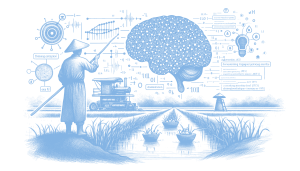 A Korean garlic farmer, who lacks formal coding skills, has developed a unique approach to building an "executing engine" using large language models (LLMs) and sandboxed code interpreters. By interacting with AI chat interfaces, the farmer structures ideas and runs them through a code interpreter to achieve executable results, emphasizing the importance of verifying real execution versus simulated outputs. This iterative process involves cross-checking results with multiple AIs to avoid hallucinations and ensure accuracy. Despite the challenges, the farmer finds value and insights in this experimental method, demonstrating how AI can empower individuals without technical expertise to engage in complex problem-solving and innovation. Why this matters: This highlights the potential of AI tools to democratize access to advanced technology, enabling individuals from diverse backgrounds to innovate and contribute to technical fields without traditional expertise.
-
Inside NVIDIA Nemotron 3: Efficient Agentic AI
Read Full Article: Inside NVIDIA Nemotron 3: Efficient Agentic AI NVIDIA's Nemotron 3 introduces a new era of agentic AI systems with its hybrid Mamba-Transformer mixture-of-experts (MoE) architecture, designed for fast throughput and accurate reasoning across large contexts. The model supports a 1M-token context window, enabling sustained reasoning for complex, multi-agent applications, and is trained using reinforcement learning across various environments to align with real-world agentic tasks. Nemotron 3's openness allows developers to customize and extend models, with available datasets and tools supporting transparency and reproducibility. The Nemotron 3 Nano model is available now, with Super and Ultra models to follow, offering enhanced reasoning depth and efficiency. This matters because it represents a significant advancement in AI technology, enabling more efficient and accurate multi-agent systems crucial for complex problem-solving and decision-making tasks.
-
Local AI Image Upscaler for Android
Read Full Article: Local AI Image Upscaler for Android![[P] I built a fully local AI Image Upscaler for Android because I didn't want to rely on cloud servers.](https://www.tweakedgeek.com/wp-content/uploads/2025/12/featured-article-6253-300x171.png) RendrFlow is an Android app developed to upscale low-resolution images using AI models directly on the device, eliminating the need for cloud servers and ensuring user privacy. The app offers upscaling options up to 16x resolution and includes features like hardware control for CPU and GPU usage, batch processing, and additional tools such as an AI background remover and magic eraser. The developer seeks user feedback on performance across different devices, particularly regarding the app's "Ultra" models and the thermal management of various phones in GPU Burst mode. This matters because it provides a privacy-focused solution for image enhancement without relying on external servers.
RendrFlow is an Android app developed to upscale low-resolution images using AI models directly on the device, eliminating the need for cloud servers and ensuring user privacy. The app offers upscaling options up to 16x resolution and includes features like hardware control for CPU and GPU usage, batch processing, and additional tools such as an AI background remover and magic eraser. The developer seeks user feedback on performance across different devices, particularly regarding the app's "Ultra" models and the thermal management of various phones in GPU Burst mode. This matters because it provides a privacy-focused solution for image enhancement without relying on external servers.
-
AI Evolution: From Slop to Super Intelligence
Read Full Article: AI Evolution: From Slop to Super Intelligence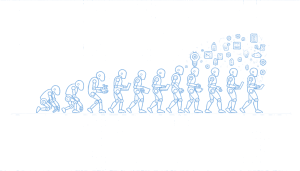 As AI technology continues to advance rapidly, AI models are expected to surpass human intelligence levels significantly by 2026, with projected IQ scores reaching 150, comparable to Nobel laureates. This evolution will likely transform social media content creation, as AI-generated content becomes increasingly sophisticated and engaging. The shift may lead to a new era where humans rely heavily on super-intelligent AIs for content ideation and production, potentially rendering human-generated content obsolete or inferior. The transition from AI slop to human slop underscores the need for humans to adapt and integrate these advanced technologies to remain relevant in content creation. This matters because it highlights the potential for AI to revolutionize industries and the importance of human adaptation to technological advancements.