
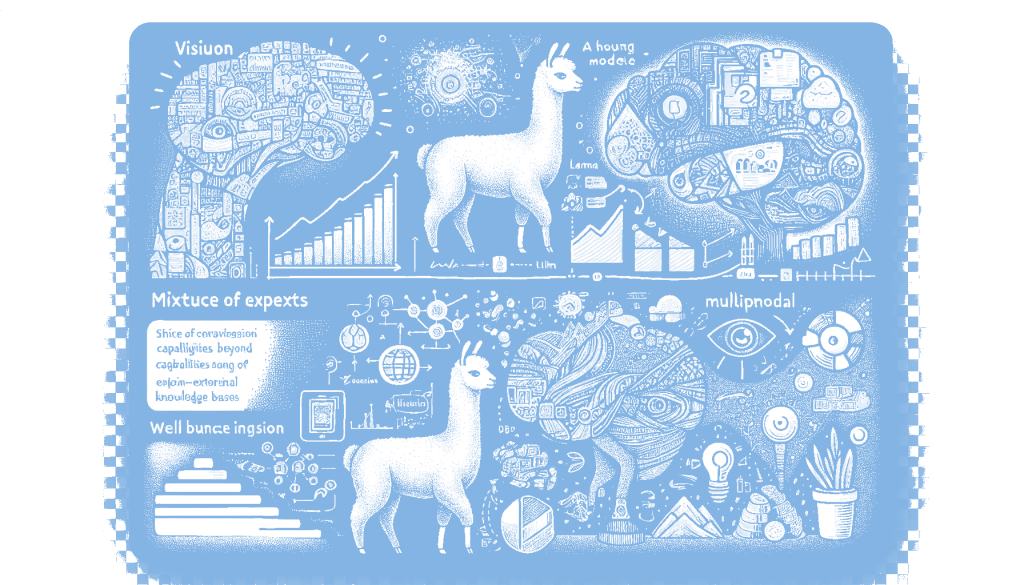
In 2025, the landscape of local Large Language Models (LLMs) has evolved significantly, with Llama AI technology leading the charge. The llama.cpp has become the preferred choice for many users due to its superior performance, flexibility, and seamless integration with Llama models. Mixture of Experts (MoE) models are gaining traction for their ability to efficiently run large models on consumer hardware, balancing performance with resource usage. Additionally, new local LLMs are emerging with enhanced capabilities, particularly in vision and multimodal applications, while Retrieval-Augmented Generation (RAG) systems are helping simulate continuous learning by incorporating external knowledge bases. These advancements are further supported by investments in high-VRAM hardware, enabling more complex models on consumer machines. This matters because it highlights the rapid advancements in AI technology, making powerful AI tools more accessible and versatile for a wide range of applications.
The landscape of local Large Language Models (LLMs) has undergone remarkable transformations, particularly with the advancements seen in 2025. A standout development is the shift towards llama.cpp, which has become the preferred choice for many users over other LLM runners like Ollama. This shift is largely attributed to llama.cpp’s superior performance and flexibility, as well as its seamless integration with Llama models. This transition underscores the importance of efficiency and adaptability in model runners, as users seek solutions that can handle complex tasks with greater ease and effectiveness.
Another significant trend is the rise of Mixture of Experts (MoE) models. These models have garnered attention for their ability to run large-scale models on consumer hardware without compromising on performance. MoE models strike a balance between computational efficiency and resource usage, making them an attractive option for those looking to harness the power of large models without the need for specialized hardware. This democratization of AI technology allows more individuals and organizations to access advanced capabilities, fostering innovation across various sectors.
Local LLMs are also expanding their capabilities beyond text, with a growing focus on vision and multimodal functionalities. This evolution is crucial as it enables more complex and versatile applications, such as integrating visual data with textual analysis for richer insights. The ability to process and understand multiple types of data simultaneously opens up new possibilities for AI applications, from enhanced user experiences in consumer products to more sophisticated data analysis tools in professional settings.
Despite the challenges of continuous learning in LLMs, Retrieval-Augmented Generation (RAG) systems offer a promising approach by simulating continuous learning through the integration of external knowledge bases. This method allows models to stay updated with new information, enhancing their relevance and accuracy over time. Coupled with advancements in high-VRAM hardware, which facilitate the deployment of larger and more complex models on consumer-grade machines, these developments are pushing the boundaries of what is possible with local LLMs. This progress not only highlights the rapid pace of technological advancement but also emphasizes the increasing accessibility and utility of AI in everyday applications.
Read the original article here