
AI training
-
NVIDIA’s NitroGen: AI Model for Gaming Agents
Read Full Article: NVIDIA’s NitroGen: AI Model for Gaming Agents NVIDIA's AI research team has introduced NitroGen, a groundbreaking vision action foundation model designed for generalist gaming agents. NitroGen learns to play commercial games directly from visual data and gamepad actions, utilizing a vast dataset of 40,000 hours of gameplay from over 1,000 games. The model employs a sophisticated action extraction pipeline to convert video data into actionable insights, enabling it to achieve significant task completion rates across various gaming genres without reinforcement learning. NitroGen's unified controller action space allows for seamless policy transfer across multiple games, demonstrating improved performance when fine-tuned on new titles. This advancement matters because it showcases the potential of AI to autonomously learn complex tasks from large-scale, diverse data sources, paving the way for more versatile and adaptive AI systems in gaming and beyond.
-
12 Free AI Agent Courses: CrewAI, LangGraph, AutoGen
Read Full Article: 12 Free AI Agent Courses: CrewAI, LangGraph, AutoGen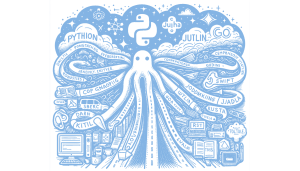 Python remains the leading programming language for machine learning due to its extensive libraries and user-friendly nature. However, other languages like C++, Julia, R, Go, Swift, Kotlin, Java, Rust, Dart, and Vala are also utilized for specific tasks where performance or platform-specific requirements are critical. Each language offers unique advantages, such as C++ for performance-critical tasks, R for statistical analysis, and Swift for iOS development. Understanding multiple programming languages can enhance one's ability to tackle diverse machine learning challenges effectively. This matters because diversifying language skills can optimize machine learning solutions for different technical and platform demands.
-
NVIDIA Blackwell Boosts AI Training Speed and Efficiency
Read Full Article: NVIDIA Blackwell Boosts AI Training Speed and Efficiency NVIDIA's Blackwell architecture is revolutionizing AI model training by offering up to 3.2 times faster training performance and nearly doubling training performance per dollar compared to previous-generation architectures. This is achieved through innovations across GPUs, CPUs, networking, and software, including the introduction of NVFP4 precision. The GB200 NVL72 and GB300 NVL72 GPUs demonstrate significant performance improvements in MLPerf benchmarks, allowing AI models to be trained and deployed more quickly and cost-effectively. These advancements enable AI developers to accelerate their revenue generation by bringing sophisticated models to market faster and more efficiently. This matters because it enhances the ability to train larger, more complex AI models while reducing costs, thus driving innovation and economic opportunities in the AI industry.
-
Inside NVIDIA Nemotron 3: Efficient Agentic AI
Read Full Article: Inside NVIDIA Nemotron 3: Efficient Agentic AI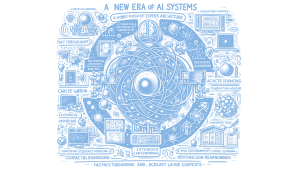 NVIDIA's Nemotron 3 introduces a new era of agentic AI systems with its hybrid Mamba-Transformer mixture-of-experts (MoE) architecture, designed for fast throughput and accurate reasoning across large contexts. The model supports a 1M-token context window, enabling sustained reasoning for complex, multi-agent applications, and is trained using reinforcement learning across various environments to align with real-world agentic tasks. Nemotron 3's openness allows developers to customize and extend models, with available datasets and tools supporting transparency and reproducibility. The Nemotron 3 Nano model is available now, with Super and Ultra models to follow, offering enhanced reasoning depth and efficiency. This matters because it represents a significant advancement in AI technology, enabling more efficient and accurate multi-agent systems crucial for complex problem-solving and decision-making tasks.
-
Simulate Radio Environment with NVIDIA Aerial Omniverse
Read Full Article: Simulate Radio Environment with NVIDIA Aerial Omniverse The development of 5G and 6G technology necessitates high-fidelity radio channel modeling, which is often hindered by a fragmented ecosystem where simulators and AI frameworks operate independently. NVIDIA's Aerial Omniverse Digital Twin (AODT) offers a solution by enabling researchers and engineers to simulate the physical layer components of these systems with high accuracy. AODT integrates seamlessly into various programming environments, providing a centralized computation core for managing complex electromagnetic physics calculations and enabling efficient data transfer through GPU-memory access. This facilitates the creation of dynamic, georeferenced simulations, allowing users to retrieve high-fidelity, physics-based channel impulse responses for analysis or AI training. The transition to 6G, characterized by massive data volumes and AI-native networks, benefits significantly from such advanced simulation capabilities, making AODT a crucial tool for future wireless communication development. Why this matters: High-fidelity simulations are essential for advancing 5G and 6G technologies, which are critical for future communication networks.
-
Pretraining Llama Model on Local GPU
Read Full Article: Pretraining Llama Model on Local GPU Pretraining a Llama model on a local GPU involves setting up a comprehensive pipeline using PyTorch and Hugging Face libraries. The process starts with loading a tokenizer and a dataset, followed by defining the model architecture through a series of classes, such as LlamaConfig, RotaryPositionEncoding, and LlamaAttention, among others. The Llama model is built using transformer layers with rotary position embeddings and grouped-query attention mechanisms. The training setup includes defining hyperparameters like learning rate, batch size, and sequence length, along with creating data loaders, optimizers, and learning rate schedulers. The training loop involves computing attention masks, applying the model to input data, calculating loss using cross-entropy, and updating model weights with gradient clipping. Checkpoints are saved periodically to resume training if interrupted, and the final model is saved upon completion. This matters because it provides a detailed guide for developers to pretrain large language models efficiently on local hardware, making advanced AI capabilities more accessible.
-
Open-source BardGPT Model Seeks Contributors
Read Full Article: Open-source BardGPT Model Seeks Contributors BardGPT is an open-source, educational, and research-friendly GPT-style model that has been developed with a focus on simplicity and accessibility. It is a decoder-only Transformer model trained entirely from scratch using the Tiny Shakespeare dataset. The project provides a clean architectural framework, comprehensive training scripts, and checkpoints for both the best validation and fully-trained models. Additionally, BardGPT supports character-level sampling and includes implementations of attention mechanisms, embeddings, and feed-forward networks from the ground up. The creator of BardGPT is seeking contributors to enhance and expand the project. Opportunities for contribution include adding new datasets to broaden the model's training capabilities, extending the architecture to improve its performance and functionality, and refining sampling and training tools. There is also a call for building visualizations to better understand model operations and improving the documentation to make the project more accessible to new users and developers. For those interested in Transformers, machine learning training, or contributing to open-source models, BardGPT offers a collaborative platform to engage with cutting-edge AI technology. The project not only serves as a learning tool but also as an opportunity to contribute to the development and refinement of Transformer models. This matters as it fosters community involvement and innovation in the field of artificial intelligence, making advanced technologies more accessible and customizable for educational and research purposes.
-
Pretraining BERT from Scratch: A Comprehensive Guide
Read Full Article: Pretraining BERT from Scratch: A Comprehensive Guide Pretraining a BERT model from scratch involves setting up a comprehensive architecture that includes various components like the BertConfig, BertBlock, BertPooler, and BertModel classes. The BertConfig class defines the configuration parameters such as vocabulary size, number of layers, hidden size, and dropout probability. The BertBlock class represents a single transformer block within BERT, utilizing multi-head attention, layer normalization, and feed-forward networks. The BertPooler class is responsible for processing the [CLS] token output, which is crucial for tasks like classification. The BertModel class serves as the backbone of the BERT model, incorporating embedding layers for words, types, and positions, as well as a series of transformer blocks. The forward method processes input sequences through these components, generating contextualized embeddings and a pooled output for the [CLS] token. Additionally, the BertPretrainingModel class extends the BertModel to include heads for masked language modeling (MLM) and next sentence prediction (NSP), essential tasks for BERT pretraining. The model is trained using a dataset, with a custom collate function handling variable-length sequences and a DataLoader to batch the data. Training involves setting up an optimizer, learning rate scheduler, and loss function, followed by iterating over multiple epochs to update the model parameters. The MLM and NSP tasks are optimized using cross-entropy loss, with the total loss being the sum of both. The model is trained on a GPU if available, and the state of the model is saved after training for future use. Understanding the process of pretraining a BERT model from scratch is crucial for developing custom language models tailored to specific datasets and tasks, enhancing the performance of natural language processing applications. This matters because pretraining a BERT model from scratch allows for customized language models that can significantly improve the performance of NLP tasks on specific datasets and applications.