
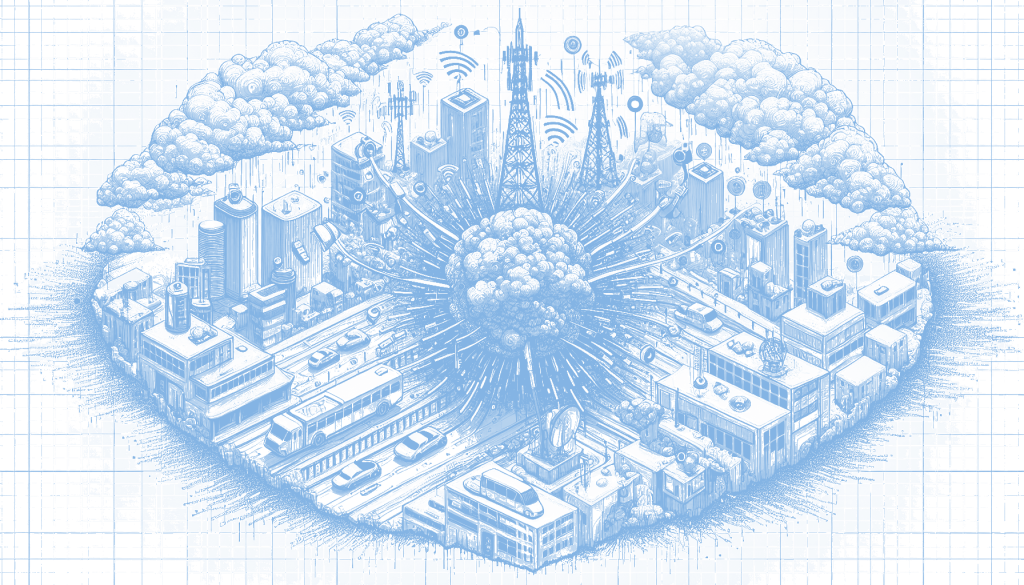
The development of 5G and 6G technology necessitates high-fidelity radio channel modeling, which is often hindered by a fragmented ecosystem where simulators and AI frameworks operate independently. NVIDIA’s Aerial Omniverse Digital Twin (AODT) offers a solution by enabling researchers and engineers to simulate the physical layer components of these systems with high accuracy. AODT integrates seamlessly into various programming environments, providing a centralized computation core for managing complex electromagnetic physics calculations and enabling efficient data transfer through GPU-memory access. This facilitates the creation of dynamic, georeferenced simulations, allowing users to retrieve high-fidelity, physics-based channel impulse responses for analysis or AI training. The transition to 6G, characterized by massive data volumes and AI-native networks, benefits significantly from such advanced simulation capabilities, making AODT a crucial tool for future wireless communication development. Why this matters: High-fidelity simulations are essential for advancing 5G and 6G technologies, which are critical for future communication networks.
The rapid advancement of 5G and the anticipated rollout of 6G networks require sophisticated radio channel modeling to ensure efficient and reliable communication. However, the existing ecosystem is fragmented, with different simulators and AI training frameworks operating independently and often using different programming languages. This fragmentation poses a significant challenge for researchers and engineers attempting to simulate the behavior of key components of the physical layer of these systems. The NVIDIA Aerial Omniverse Digital Twin (AODT) offers a solution by providing a high-fidelity simulation environment that can be integrated into various programming environments, including C++, Python, and MATLAB.
The AODT is designed to streamline the simulation process by serving as a centralized, high-power computation core that manages complex electromagnetic physics calculations. It uses massive 3D city models to simulate realistic environments, which is crucial for accurately modeling radio signal propagation in urban settings. The AODT client provides a lightweight developer interface, enabling efficient data transfer and direct GPU-memory access to radio-channel outputs. This architecture allows researchers to simulate dynamic scenarios with high precision, providing valuable insights into the performance of 5G and 6G networks under different conditions.
One of the key advantages of using AODT is its ability to simulate dynamic elements such as procedural user equipment (UEs) and scatterers, like vehicles, which interact with and alter radio signals. This capability is essential for creating realistic simulations that account for the complexities of urban environments. By using georeferenced coordinates and defining spawn zones, researchers can model the movement of UEs and other elements, adding a layer of realism that traditional simulation methods often lack. This dynamic modeling is critical for developing AI-native networks that can adapt to changing conditions and optimize performance in real-time.
As the telecommunications industry moves towards 6G, characterized by massive data volumes and extreme heterogeneity, traditional simulation methods are becoming inadequate. The AODT’s gRPC-based service architecture democratizes access to high-fidelity radio simulations, providing the ground truth needed for machine learning and algorithm exploration. By integrating AODT into their simulation workflows, researchers and developers can harness the power of physics-based simulations to drive innovation in 6G technology. This is crucial for building the future of communication networks that are not only faster and more efficient but also capable of supporting the demands of an increasingly connected world.
Read the original article here
Comments
One response to “Simulate Radio Environment with NVIDIA Aerial Omniverse”
While NVIDIA’s Aerial Omniverse Digital Twin offers impressive capabilities for simulating the physical layer of 5G and 6G technologies, it’s important to consider the computational demands and potential accessibility barriers for smaller research teams with limited resources. Including a discussion on the scalability of AODT for different team sizes and budgets could strengthen the claim about its broad applicability. How does NVIDIA plan to address the potential disparity in access to high-performance computing resources required for optimal use of AODT?