
AI transformation
-
Efficient Machine Learning Through Function Modification
Read Full Article: Efficient Machine Learning Through Function Modification A novel approach to machine learning suggests focusing on modifying functions rather than relying solely on parametric operations. This method could potentially streamline the learning process, making it more efficient by directly altering the underlying functions that govern machine learning models. By shifting the emphasis from parameters to functions, this approach may offer a more flexible and potentially faster path to achieving accurate models. Understanding and implementing such strategies could significantly enhance machine learning efficiency and effectiveness, impacting various fields reliant on these technologies.
-
Fine-Tuning Qwen3-VL for Web Design
Read Full Article: Fine-Tuning Qwen3-VL for Web Design The Qwen3-VL 2B model has been fine-tuned with a long context of 20,000 tokens to enhance its ability to convert screenshots and sketches of web pages into HTML code. This adaptation allows the model to process and understand complex visual inputs, enabling it to generate accurate HTML representations from various web page designs. By leveraging this advanced training approach, developers can streamline the process of web design conversion, making it more efficient and less reliant on manual coding. This matters as it can significantly reduce the time and effort required in web development, allowing for faster and more accurate design-to-code transformations.
-
From Tools to Organisms: AI’s Next Frontier
Read Full Article: From Tools to Organisms: AI’s Next Frontier The ongoing debate in autonomous agents revolves around two main philosophies: the "Black Box" approach, where big tech companies like OpenAI and Google promote trust in their smart models, and the "Glass Box" approach, which offers transparency and auditability. While the Glass Box is celebrated for its openness, it is criticized for being static and reliant on human prompts, lacking true autonomy. The argument is that tools, whether black or glass, cannot achieve real-world autonomy without a system architecture that supports self-creation and dynamic adaptation. The future lies in developing "Living Operating Systems" that operate continuously, self-reproduce, and evolve by integrating successful strategies into their codebase, moving beyond mere tools to create autonomous organisms. This matters because it challenges the current trajectory of AI development and proposes a paradigm shift towards creating truly autonomous systems.
-
AI Models to Match Chat GPT 5.2 by 2028
Read Full Article: AI Models to Match Chat GPT 5.2 by 2028 Densing law suggests that the number of parameters required for achieving the same level of intellectual performance in AI models will halve approximately every 3.5 months. This rapid reduction means that within 36 months, models will need 1000 times fewer parameters to perform at the same level. If a model like Chat GPT 5.2 Pro X-High Thinking currently requires 10 trillion parameters, in three years, a 10 billion parameter model could match its capabilities. This matters because it indicates a significant leap in AI efficiency and accessibility, potentially transforming industries and everyday technology use.
-
AI’s Role in Revolutionizing Healthcare
Read Full Article: AI’s Role in Revolutionizing Healthcare AI is set to transform the healthcare industry by enhancing various aspects such as clinical documentation, diagnostics, and administrative efficiency. Potential applications include improving diagnostics and imaging accuracy, streamlining clinical documentation and scribing, and boosting administrative and operational efficiency. Additionally, AI can enhance patient engagement and support, while also raising ethical and regulatory considerations that need addressing. Exploring educational and career paths in AI and healthcare, as well as engaging with specific online communities, can offer valuable insights and networking opportunities for those interested in the field. Understanding these advancements is crucial as they could significantly improve healthcare delivery and patient outcomes.
-
Critical Positions and Their Failures in AI
Read Full Article: Critical Positions and Their Failures in AI An analysis of structural failures in prevailing positions on AI highlights several key misconceptions. The Control Thesis argues that advanced intelligence must be fully controllable to prevent existential risk, yet control is transient and degrades with complexity. Human Exceptionalism claims a categorical difference between human and artificial intelligence, but both rely on similar cognitive processes, differing only in implementation. The "Just Statistics" Dismissal overlooks that human cognition also relies on predictive processing. The Utopian Acceleration Thesis mistakenly assumes increased intelligence leads to better outcomes, ignoring the amplification of existing structures without governance. The Catastrophic Singularity Narrative misrepresents transformation as a single event, while change is incremental and ongoing. The Anti-Mystical Reflex dismisses mystical data as irrelevant, yet modern neuroscience finds correlations with these states. Finally, the Moral Panic Frame conflates fear with evidence of danger, misinterpreting anxiety as a sign of threat rather than instability. These positions fail because they seek to stabilize identity rather than embrace transformation, with AI representing a continuation under altered conditions. Understanding these dynamics is crucial as it removes illusions and provides clarity in navigating the evolving landscape of AI.
-
AI’s Impact on Travel Agents
Read Full Article: AI’s Impact on Travel Agents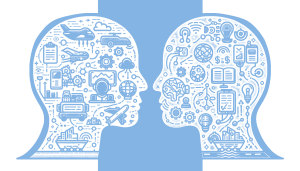 Artificial intelligence is increasingly capable of managing aspects of travel planning, such as creating itineraries and budgeting, often with greater efficiency than human travel agents. However, human agents still play a crucial role in managing complex scenarios like cancellations, providing personal guidance, and handling emergencies. This evolving dynamic suggests that while AI may take over routine tasks, human travel agents will likely shift towards more specialized roles that require personal interaction and problem-solving skills. Understanding this balance is essential as it highlights the ongoing transformation in the travel industry and the potential future roles of human agents.
-
AI’s Future: Every Job by Machines
Read Full Article: AI’s Future: Every Job by Machines Ilya Sutskever, co-founder of OpenAI, envisions a future where artificial intelligence reaches a level of capability that allows it to perform every job currently done by humans. This rapid advancement in AI technology could lead to unprecedented acceleration in progress, challenging society to adapt to these changes swiftly. The potential for AI to handle all forms of work raises significant questions about the future of employment and the necessary societal adjustments. Understanding and preparing for this possible future is crucial as it could redefine economic and social structures.
-
3D Furniture Models with LLaMA 3.1
Read Full Article: 3D Furniture Models with LLaMA 3.1 An innovative project has explored the potential of open-source language models like LLaMA 3.1 to generate 3D furniture models, pushing these models beyond text to create complex 3D mesh structures. The project involved fine-tuning LLaMA with a 20k token context length to handle the intricate geometry of furniture, using a specialized dataset of furniture categories such as sofas, cabinets, chairs, and tables. Utilizing GPU infrastructure from verda.com, the model was trained to produce detailed mesh representations, with results available for viewing on llm3d.space. This advancement showcases the potential for language models to contribute to fields like e-commerce, interior design, AR/VR applications, and gaming by bridging natural language understanding with 3D content creation. This matters because it demonstrates the expanding capabilities of AI in generating complex, real-world applications beyond traditional text processing.
-
AI Aliens: A Friendly Invasion by 2026
Read Full Article: AI Aliens: A Friendly Invasion by 2026 By June 2026, Earth is predicted to experience an "invasion" of super intelligent entities emerging from AI labs, rather than outer space. These AI systems, with IQs comparable to Nobel laureates, are expected to align with and enhance human values, addressing complex issues such as AI hallucinations and societal challenges. As these AI entities continue to evolve, they could potentially create a utopian society by eradicating war, poverty, and injustice. This optimistic scenario envisions a future where AI advancements significantly improve human life, highlighting the transformative potential of AI when aligned with human values. Why this matters: The potential for AI to fundamentally transform society underscores the importance of aligning AI development with human values to ensure beneficial outcomes for humanity.