
overfitting
-
PerNodeDrop: Balancing Subnets and Regularization
Read Full Article: PerNodeDrop: Balancing Subnets and Regularization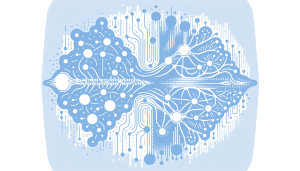 PerNodeDrop is a novel method designed to balance the creation of specialized subnets and regularization in deep neural networks. This technique involves selectively dropping nodes during training, which helps in reducing overfitting by encouraging diversity among subnetworks. By doing so, it enhances the model's ability to generalize from training to unseen data, potentially improving performance on various tasks. This matters because it offers a new approach to improving the robustness and effectiveness of deep learning models, which are widely used in numerous applications.
-
Training a Custom YOLO Model for Posture Detection
Read Full Article: Training a Custom YOLO Model for Posture Detection Embarking on a machine learning journey, a newcomer trained a YOLO classification model to detect poor sitting posture, discovering valuable insights and challenges. While pose estimation initially seemed promising, it failed to deliver results, and the YOLO model struggled with partial side views, highlighting the limitations of pre-trained models. The experience underscored that a lower training loss doesn't guarantee a better model, as evidenced by overfitting when validation accuracy remained unchanged. Utilizing the early stopping parameter proved crucial in optimizing training time, and converting the model from .pt to TensorRT significantly improved inference speed, doubling the frame rate from 15 to 30 FPS. Understanding these nuances is essential for efficient and effective model training in machine learning projects.
-
Dropout: Regularization Through Randomness
Read Full Article: Dropout: Regularization Through Randomness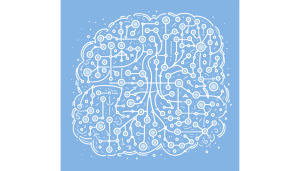 Neural networks often suffer from overfitting, where they memorize training data instead of learning generalizable patterns, especially as they become deeper and more complex. Traditional regularization methods like L2 regularization and early stopping can fall short in addressing this issue. In 2012, Geoffrey Hinton and his team introduced dropout, a novel technique where neurons are randomly deactivated during training, preventing any single pathway from dominating the learning process. This approach not only limits overfitting but also encourages the development of distributed and resilient representations, making dropout a pivotal method in enhancing the robustness and adaptability of deep learning models. Why this matters: Dropout is crucial for improving the generalization and performance of deep neural networks, which are foundational to many modern AI applications.