
TensorRT
-
Training a Custom YOLO Model for Posture Detection
Read Full Article: Training a Custom YOLO Model for Posture Detection Embarking on a machine learning journey, a newcomer trained a YOLO classification model to detect poor sitting posture, discovering valuable insights and challenges. While pose estimation initially seemed promising, it failed to deliver results, and the YOLO model struggled with partial side views, highlighting the limitations of pre-trained models. The experience underscored that a lower training loss doesn't guarantee a better model, as evidenced by overfitting when validation accuracy remained unchanged. Utilizing the early stopping parameter proved crucial in optimizing training time, and converting the model from .pt to TensorRT significantly improved inference speed, doubling the frame rate from 15 to 30 FPS. Understanding these nuances is essential for efficient and effective model training in machine learning projects.
-
PolyInfer: Unified Inference API for Vision Models
Read Full Article: PolyInfer: Unified Inference API for Vision Models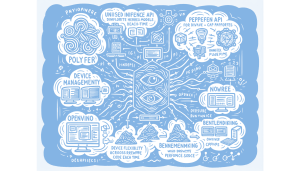 PolyInfer is a unified inference API designed to streamline the deployment of vision models across various hardware backends such as ONNX Runtime, TensorRT, OpenVINO, and IREE without the need to rewrite code for each platform. It simplifies dependency management and supports multiple devices, including CPUs, GPUs, and NPUs, by allowing users to install specific packages for NVIDIA, Intel, AMD, or all supported hardware. Users can load models, benchmark performance, and compare backend efficiencies with a single API, making it highly versatile for different machine learning tasks. The platform supports various operating systems and environments, including Windows, Linux, WSL2, and Google Colab, and is open-source under the Apache 2.0 license. This matters because it significantly reduces the complexity and effort required to deploy machine learning models across diverse hardware environments, enhancing accessibility and efficiency for developers.
-
TensorFlow 2.17 Updates
Read Full Article: TensorFlow 2.17 Updates TensorFlow 2.17 introduces significant updates, including a CUDA update that enhances performance on Ada-Generation GPUs like NVIDIA RTX 40**, L4, and L40, while dropping support for older Maxwell GPUs to keep Python wheel sizes manageable. The release also prepares for the upcoming TensorFlow 2.18, which will support Numpy 2.0, potentially affecting some edge cases in API usage. Additionally, TensorFlow 2.17 marks the last version to include TensorRT support, as future releases will no longer support it. These changes reflect ongoing efforts to optimize TensorFlow for modern hardware and software environments, ensuring better performance and compatibility.
-
Four Ways to Run ONNX AI Models on GPU with CUDA
Read Full Article: Four Ways to Run ONNX AI Models on GPU with CUDA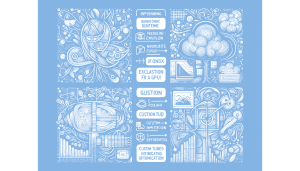 Running ONNX AI models on GPUs with CUDA can be achieved through four distinct methods, enhancing flexibility and performance for machine learning operations. These methods include using ONNX Runtime with CUDA execution provider, leveraging TensorRT for optimized inference, employing PyTorch with its ONNX export capabilities, and utilizing the NVIDIA Triton Inference Server for scalable deployment. Each approach offers unique advantages, such as improved speed, ease of integration, or scalability, catering to different needs in AI model deployment. Understanding these options is crucial for optimizing AI workloads and ensuring efficient use of GPU resources.
-
NCP-GENL Study Guide: NVIDIA Certified Pro – Gen AI LLMs
Read Full Article: NCP-GENL Study Guide: NVIDIA Certified Pro – Gen AI LLMs The NVIDIA Certified Professional – Generative AI LLMs 2026 certification is designed to validate expertise in deploying and managing large language models (LLMs) using NVIDIA's AI technologies. This certification focuses on equipping professionals with the skills needed to effectively utilize NVIDIA's hardware and software solutions to optimize the performance of generative AI models. Key areas of study include understanding the architecture of LLMs, deploying models on NVIDIA platforms, and fine-tuning models for specific applications. Preparation for the NCP-GENL certification involves a comprehensive study of NVIDIA's AI ecosystem, including the use of GPUs for accelerated computing and the integration of software tools like TensorRT and CUDA. Candidates are expected to gain hands-on experience with NVIDIA's frameworks, which are essential for optimizing model performance and ensuring efficient resource management. The study guide emphasizes practical knowledge and problem-solving skills, which are critical for managing the complexities of generative AI systems. Achieving the NCP-GENL certification offers professionals a competitive edge in the rapidly evolving field of AI, as it demonstrates a specialized understanding of cutting-edge technologies. As businesses increasingly rely on AI-driven solutions, certified professionals are well-positioned to contribute to innovative projects and drive technological advancements. This matters because it highlights the growing demand for skilled individuals who can harness the power of generative AI to create impactful solutions across various industries.