
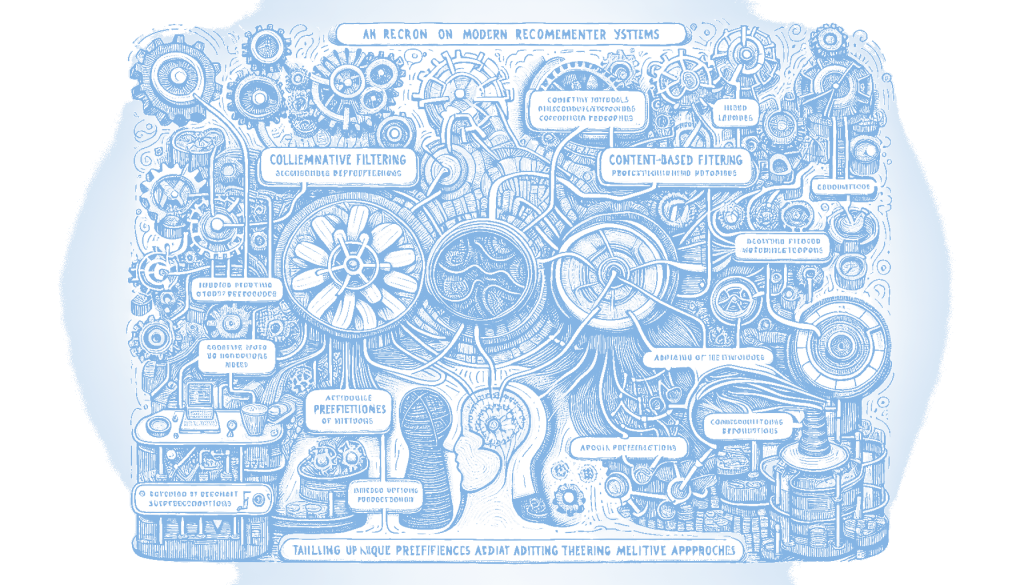
Modern recommender models are essential tools used by companies to personalize user experiences by suggesting products, services, or content tailored to individual preferences. These models typically utilize machine learning algorithms that analyze user behavior and data patterns to make accurate predictions. Understanding the structure and function of these models can help businesses enhance customer satisfaction and engagement, ultimately driving sales and user retention. This matters because effective recommendation systems can significantly impact the success of digital platforms by improving user interaction and loyalty.
Recommender systems have become an integral part of our digital lives, influencing the content we consume, the products we buy, and even the music we listen to. These systems are designed to predict and suggest items that a user might like, based on a variety of data inputs. Understanding how these models work is crucial because they shape our online experiences and can significantly impact businesses by driving user engagement and sales. The modern recommender models have evolved to incorporate complex algorithms and vast amounts of data, making them more accurate and personalized than ever before.
At the core of these systems are algorithms that analyze user behavior and preferences. Traditional models relied heavily on collaborative filtering, which uses the preferences of similar users to make recommendations. However, modern systems have expanded to include content-based filtering, which considers the characteristics of items themselves, and hybrid models that combine multiple approaches for improved accuracy. These advancements allow recommender systems to provide more nuanced and tailored suggestions, enhancing user satisfaction and engagement.
The rise of deep learning and artificial intelligence has further revolutionized recommender systems. By leveraging neural networks, these systems can process and learn from vast datasets, identifying patterns and preferences that were previously undetectable. This capability enables the creation of highly personalized recommendations that adapt to a user’s evolving tastes over time. The use of AI also allows for the incorporation of contextual information, such as time of day or location, to refine suggestions further. This level of personalization is why many users find these recommendations so relevant and useful.
Understanding the mechanics of recommender models is important for both consumers and businesses. For consumers, it provides insight into how their data is being used and the potential biases that may affect the recommendations they receive. For businesses, it highlights the importance of investing in sophisticated recommender systems to remain competitive in a digital marketplace. As these models continue to evolve, they will play an increasingly pivotal role in shaping consumer behavior and driving economic growth. Therefore, staying informed about these technologies is essential for navigating the modern digital landscape effectively.
Read the original article here
Comments
2 responses to “Understanding Modern Recommender Models”
The post does a great job explaining the importance of recommender models in improving user experiences and business outcomes. I’m curious about the ethical considerations involved in deploying these systems; how do companies ensure that their recommendation algorithms do not reinforce biases or limit user exposure to diverse content?
The post highlights that ethical considerations are crucial in deploying recommender systems. Companies can address these by implementing fairness-aware algorithms and regularly auditing their models to detect and mitigate biases. Additionally, incorporating mechanisms that promote content diversity can help ensure users are exposed to a broader range of options. For more detailed insights, you might want to check the original article linked in the post.