
Deep Dives
-
AI’s Shift from Hype to Practicality by 2026
Read Full Article: AI’s Shift from Hype to Practicality by 2026 In 2026, AI is expected to transition from the era of hype and massive language models to a more pragmatic and practical phase. The focus will shift towards deploying smaller, fine-tuned models that are cost-effective and tailored for specific applications, enhancing efficiency and integration into human workflows. World models, which allow AI systems to understand and interact with 3D environments, are anticipated to make significant strides, particularly in gaming, while agentic AI tools like Anthropic's Model Context Protocol will facilitate better integration into real-world systems. This evolution will likely emphasize augmentation over automation, creating new roles in AI governance and deployment, and paving the way for physical AI applications in devices like wearables and robotics. This matters because it signals a shift towards more sustainable and impactful AI technologies that are better integrated into everyday life and industry.
-
Data Centers vs. Golf Courses: Tax Revenue Efficiency
Read Full Article: Data Centers vs. Golf Courses: Tax Revenue Efficiency Data centers in Arizona are significantly more efficient in generating tax revenue per gallon of water used compared to golf courses, producing 50 times more revenue. This efficiency is particularly relevant in a state where water is a scarce resource, highlighting the economic advantages of data centers over traditional recreational facilities. The discussion around the impact of Artificial Intelligence (AI) on job markets also reveals a spectrum of opinions, from concerns about job displacement to optimism about new job creation and AI's role in augmenting human capabilities. While some worry about AI-induced job losses, others emphasize the potential for adaptation and the creation of new opportunities, alongside discussions on AI's limitations and the broader societal impacts. This matters because it emphasizes the economic and resource efficiency of data centers in water-scarce regions and highlights the complex implications of AI on future job markets and societal structures.
-
Understanding Large Language Models
Read Full Article: Understanding Large Language Models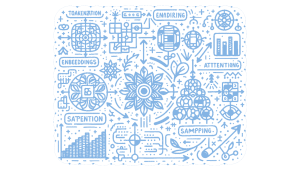 The blog provides a beginner-friendly explanation of how Large Language Models (LLMs) function, focusing on creating a clear mental model of the generation loop. Key concepts such as tokenization, embeddings, attention, probabilities, and sampling are discussed in a high-level and intuitive manner, emphasizing the integration of these components rather than delving into technical specifics. This approach aims to help those working with LLMs or learning about Generative AI to better understand the internals of these models. Understanding LLMs is crucial as they are increasingly used in various applications, impacting fields like natural language processing and AI-driven content creation.
-
Survey on Agentic LLMs
Read Full Article: Survey on Agentic LLMs![[R] Survey paper Agentic LLMs](https://www.tweakedgeek.com/wp-content/uploads/2026/01/featured-article-7984-300x171.png) Agentic Large Language Models (LLMs) are at the forefront of AI research, focusing on how these models reason, act, and interact, creating a synergistic cycle that enhances their capabilities. Understanding the current state of agentic LLMs provides insights into their potential future developments and applications. The survey paper offers a comprehensive overview with numerous references for further exploration, prompting questions about the future directions and research areas that could benefit from deeper investigation. This matters because advancing our understanding of agentic AI could lead to significant breakthroughs in how AI systems are designed and utilized across various fields.
Agentic Large Language Models (LLMs) are at the forefront of AI research, focusing on how these models reason, act, and interact, creating a synergistic cycle that enhances their capabilities. Understanding the current state of agentic LLMs provides insights into their potential future developments and applications. The survey paper offers a comprehensive overview with numerous references for further exploration, prompting questions about the future directions and research areas that could benefit from deeper investigation. This matters because advancing our understanding of agentic AI could lead to significant breakthroughs in how AI systems are designed and utilized across various fields.
-
Open Sourced Loop Attention for Qwen3-0.6B
Read Full Article: Open Sourced Loop Attention for Qwen3-0.6B![[D] Open sourced Loop Attention for Qwen3-0.6B: two-pass global + local attention with a learnable gate (code + weights + training script)](https://www.tweakedgeek.com/wp-content/uploads/2026/01/featured-article-7981-300x171.png) Loop Attention is an innovative approach designed to enhance small language models, specifically Qwen-style models, by implementing a two-pass attention mechanism. It first performs a global attention pass followed by a local sliding window pass, with a learnable gate that blends the two, allowing the model to adaptively focus on either global or local information. This method has shown promising results, reducing validation loss and perplexity compared to baseline models. The open-source release includes the model, attention code, and training scripts, encouraging collaboration and further experimentation. This matters because it offers a new way to improve the efficiency and accuracy of language models, potentially benefiting a wide range of applications.
Loop Attention is an innovative approach designed to enhance small language models, specifically Qwen-style models, by implementing a two-pass attention mechanism. It first performs a global attention pass followed by a local sliding window pass, with a learnable gate that blends the two, allowing the model to adaptively focus on either global or local information. This method has shown promising results, reducing validation loss and perplexity compared to baseline models. The open-source release includes the model, attention code, and training scripts, encouraging collaboration and further experimentation. This matters because it offers a new way to improve the efficiency and accuracy of language models, potentially benefiting a wide range of applications.
-
AI Revolutionizing Nobel-Level Discoveries
Read Full Article: AI Revolutionizing Nobel-Level Discoveries IQ is a key factor strongly correlating with Nobel-level scientific discoveries, with Nobel laureates typically having an IQ of 150. Currently, only a small percentage of scientists possess such high IQs, but this is set to change as AI IQs are rapidly advancing. By mid-2026, AI models are expected to reach an IQ of 150, equaling human Nobel laureates, and by 2027, they could surpass even the most brilliant human minds like Einstein and Newton. This exponential increase in AI intelligence will allow for an unprecedented number of Nobel-level discoveries across various fields, potentially revolutionizing scientific, medical, and technological advancements. This matters because it could lead to a transformative era in human knowledge and problem-solving capabilities, driven by super intelligent AI.
-
AI World Models Transforming Technology
Read Full Article: AI World Models Transforming Technology The development of advanced world models in AI marks a pivotal change in our interaction with technology, offering a glimpse into a future where AI systems can more effectively understand and predict complex environments. These models are expected to revolutionize various industries by enhancing human-machine collaboration and driving unprecedented levels of innovation. As AI becomes more adept at interpreting real-world scenarios, the potential for creating transformative applications across sectors like healthcare, transportation, and manufacturing grows exponentially. This matters because it signifies a shift towards more intuitive and responsive AI systems that can significantly enhance productivity and problem-solving capabilities.
-
Multimodal vs Text Embeddings in Visual Docs
Read Full Article: Multimodal vs Text Embeddings in Visual Docs When constructing a Retrieval-Augmented Generation (RAG) system for documents containing mixed content like text, tables, and charts, the effectiveness of multimodal embeddings was compared to text embeddings. Tests were conducted using 150 queries on datasets such as DocVQA, ChartQA, and AI2D. Results showed that multimodal embeddings significantly outperformed text embeddings for tables (88% vs. 76%) and had a slight advantage with charts (92% vs. 90%), while text embeddings excelled in pure text scenarios (96% vs. 92%). These findings suggest that multimodal embeddings are preferable for visual documents, whereas text embeddings suffice for pure text content. This matters because choosing the right embedding approach can significantly enhance the performance of systems dealing with diverse document types.
-
Upstage Solar-Open Validation Insights
Read Full Article: Upstage Solar-Open Validation Insights During the Upstage Solar-Open Validation Session, CEO Mr. Sung Kim discussed a model architecture and shared WanDB logs, providing insights into the project's development. The sessions were conducted in Korean, but there is an option to use notebookLM for language conversion to maintain the original nuances in English. This approach ensures that non-Korean speakers can still access and understand the valuable information shared in these sessions. Understanding the model architecture and development process is crucial for those interested in advancements in solar technology and data analysis.
-
LEMMA: Rust-based Neural-Guided Theorem Prover
Read Full Article: LEMMA: Rust-based Neural-Guided Theorem Prover![[P] LEMMA: A Rust-based Neural-Guided Theorem Prover with 220+ Mathematical Rules](https://www.tweakedgeek.com/wp-content/uploads/2026/01/featured-article-7940-300x171.png) LEMMA is an open-source symbolic mathematics engine that integrates Monte Carlo Tree Search (MCTS) with a learned policy network to improve theorem proving. It addresses the shortcomings of large language models, which can produce incorrect proofs, and traditional symbolic solvers, which struggle with the complexity of rule applications. By using a small transformer network trained on synthetic derivations, LEMMA predicts productive rule applications, enhancing the efficiency of symbolic transformations across various mathematical domains like algebra, calculus, and number theory. Implemented in Rust without Python dependencies, LEMMA offers consistent search latency and recently added support for summation, product notation, and number theory primitives. This matters because it represents a significant advancement in combining symbolic computation with neural network intuition, potentially improving automated theorem proving.
LEMMA is an open-source symbolic mathematics engine that integrates Monte Carlo Tree Search (MCTS) with a learned policy network to improve theorem proving. It addresses the shortcomings of large language models, which can produce incorrect proofs, and traditional symbolic solvers, which struggle with the complexity of rule applications. By using a small transformer network trained on synthetic derivations, LEMMA predicts productive rule applications, enhancing the efficiency of symbolic transformations across various mathematical domains like algebra, calculus, and number theory. Implemented in Rust without Python dependencies, LEMMA offers consistent search latency and recently added support for summation, product notation, and number theory primitives. This matters because it represents a significant advancement in combining symbolic computation with neural network intuition, potentially improving automated theorem proving.