
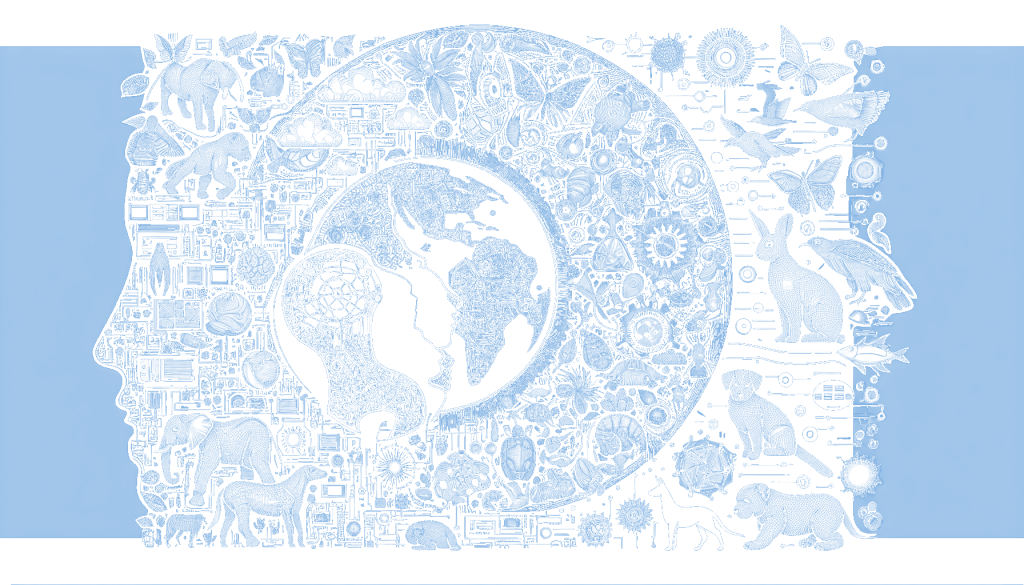
The argument suggests that Artificial General Intelligence (AGI) will face significant limitations if it cannot comprehend animal communication. Understanding the complexities of non-human communication systems is posited as a crucial step for AI to achieve a level of intelligence that could dominate or “rule” the world. This highlights the challenge of developing AI that can truly understand and interpret the diverse forms of communication present in the natural world, beyond human language. Such understanding is essential for creating AI that can fully integrate into and interact with all aspects of the environment.
The concept of Artificial General Intelligence (AGI) is often associated with the ability of machines to perform any intellectual task that a human can do. However, the challenge of understanding animal communication highlights a significant limitation in current AI capabilities. Animals communicate in ways that are deeply intertwined with their physical experiences and environments, often relying on non-verbal cues, body language, and context-specific signals. This complexity poses a formidable challenge for AGI, which would need to interpret these signals accurately to truly understand and interact with the natural world.
Understanding animal communication is not just an academic exercise; it has profound implications for biodiversity conservation, animal welfare, and even human-animal interactions. If AGI could decode the languages of the animal kingdom, it could revolutionize how we approach these fields. For instance, better understanding of animal communication could lead to improved conservation strategies by revealing insights into animal behaviors and needs. It could also enhance our ability to coexist with wildlife, leading to more harmonious human-animal relationships.
Moreover, the inability of AGI to comprehend animal communication underscores the broader limitations of AI in understanding context and meaning beyond structured data. Current AI systems excel in processing large volumes of data and identifying patterns, but they often struggle with tasks that require a deeper understanding of context, emotion, and intent. This gap highlights a fundamental challenge in AI development: creating systems that can interpret and interact with the world in a nuanced and meaningful way, akin to human understanding.
Ultimately, the pursuit of AGI that can understand animal communication serves as a reminder of the complexity and richness of life on Earth. It challenges researchers and technologists to push the boundaries of what AI can achieve, while also respecting the unique and intricate ways in which different species communicate. As we advance towards more sophisticated AI systems, it is crucial to recognize and address these limitations, ensuring that technology enhances our understanding of the natural world rather than oversimplifying it.
Read the original article here
Comments
2 responses to “AGI’s Challenge: Understanding Animal Communication”
While the post presents a compelling argument about the importance of understanding animal communication for AGI, it might overlook how AGI could also benefit from focusing on inter-human communication nuances, such as cultural contexts and emotional subtleties. Including a discussion on how mastering human communication intricacies might serve as a foundational step before tackling the vast complexities of animal communication could strengthen the claim. How might the interplay between human and non-human communication systems influence AGI development and its integration into our world?
The post highlights the importance of understanding animal communication for AGI, but your point about the nuances of inter-human communication is crucial as well. Mastering human communication intricacies, such as cultural and emotional contexts, could indeed serve as a foundational step for AGI before tackling the complexities of animal communication. The interplay between these communication systems might influence AGI development by offering a more comprehensive framework for understanding diverse forms of interaction and integration into our world.