
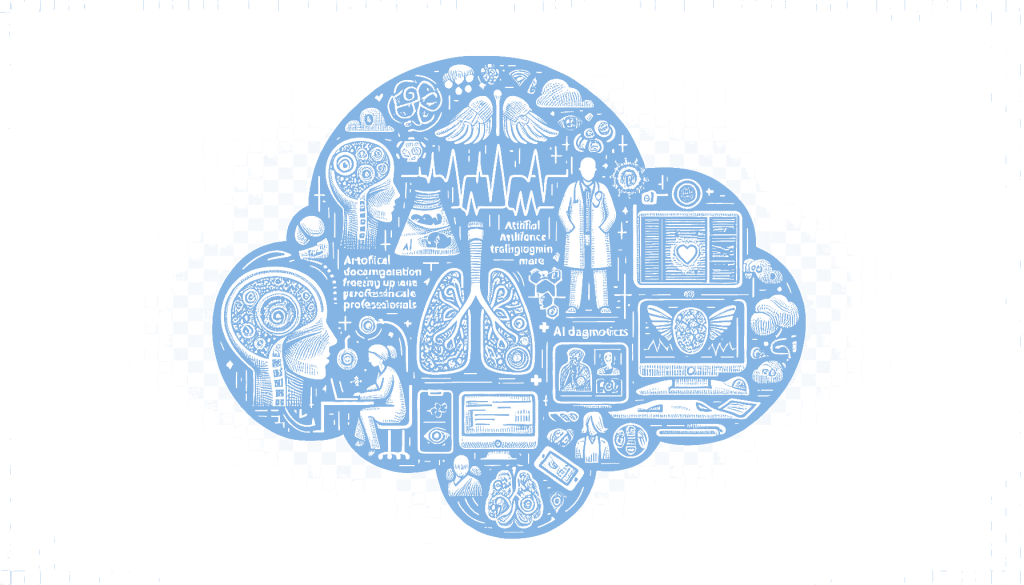
AI is transforming healthcare by streamlining administrative tasks, enhancing diagnostic accuracy, and personalizing patient care. It is expected to significantly reduce the administrative burden, improve efficiency, and reduce burnout among medical professionals through tools like AI scribes and ambient technology. AI also promises to enhance diagnostic processes with improved image analysis and early disease detection, while offering personalized medication plans and remote health monitoring. However, despite its vast potential, challenges and limitations must be addressed to ensure safe and effective integration of AI into healthcare systems. This matters because AI’s integration into healthcare could lead to more efficient systems, better patient outcomes, and reduced workload for healthcare professionals.
Artificial Intelligence (AI) is on the cusp of transforming healthcare in profound ways, promising to enhance efficiencies and improve patient outcomes. One of the most significant impacts is expected in administrative and workflow optimization. By automating routine tasks such as documentation and billing, AI can alleviate the administrative burden on healthcare professionals, thereby reducing burnout and allowing them to focus more on patient care. AI scribes, for instance, can automatically document patient visits, freeing clinicians to engage more with their patients. This shift not only improves operational efficiency but also enhances the quality of care provided.
In diagnostics, AI’s potential to revolutionize healthcare is equally promising. AI tools can analyze vast amounts of medical data to provide quicker and more accurate diagnoses. For example, AI systems are being used to scan radiology images for early detection of diseases like cancer, which can significantly improve treatment outcomes. Moreover, AI’s ability to process large datasets allows for early and precise diagnosis, which is crucial in managing diseases effectively. This capability is a game-changer, as it can potentially save lives by detecting diseases at an earlier, more treatable stage.
AI also holds promise in personalizing patient care and support. By analyzing patient data, AI can help tailor individual medication plans and create personalized home care plans. This level of customization ensures that patients receive care that is specifically suited to their needs, improving their overall health outcomes. Additionally, AI-powered tools can assist with triage, provide immediate support, and guide patients to appropriate care, enhancing the patient experience. This personalized approach not only improves patient satisfaction but also has the potential to reduce healthcare costs by preventing unnecessary treatments and hospital visits.
While the potential benefits of AI in healthcare are vast, there are challenges and considerations that must be addressed. Ensuring the safe and effective integration of AI into healthcare systems requires addressing issues such as data privacy, algorithmic bias, and the need for robust regulatory frameworks. Moreover, the reliance on AI must not overshadow the human element of healthcare, which is crucial for patient trust and empathy. As the healthcare industry navigates these challenges, the promise of AI to revolutionize healthcare remains a compelling vision, offering the potential to improve efficiency, accuracy, and personalization in patient care.
Read the original article here
Comments
2 responses to “AI’s Impact on Healthcare Efficiency”
While the post highlights the significant potential of AI in improving healthcare efficiency, I’m curious about the ethical considerations that come with the integration of AI tools, especially concerning patient data privacy. How do you see healthcare systems balancing the need for efficient AI analytics with the imperative of maintaining patient confidentiality?
The post suggests that balancing AI analytics with patient confidentiality is crucial and can be achieved by implementing robust data encryption, anonymization techniques, and strict access controls. Additionally, adhering to existing regulations like GDPR and HIPAA is essential to ensure patient data privacy while leveraging AI technologies. For more detailed insights, you might want to check out the original article linked in the post.