
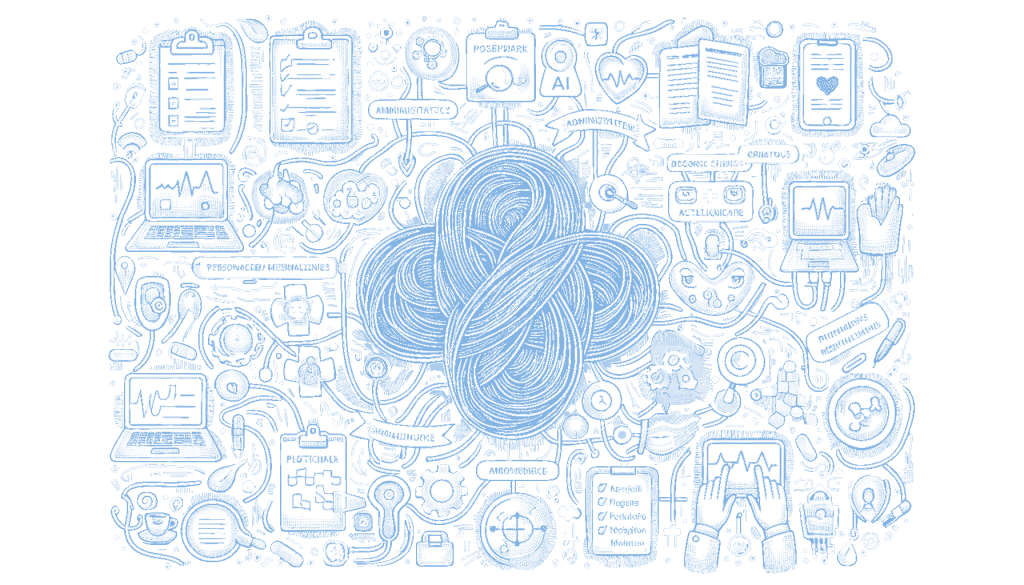
AI is revolutionizing healthcare by streamlining administrative tasks, enhancing diagnostic accuracy, and personalizing patient care. It can significantly reduce the administrative burden, improve efficiency, and reduce burnout among medical professionals through AI scribes and ambient technology. AI is also set to enhance diagnostic tools, such as image analysis for detecting anomalies, and provide personalized patient care through customized medication plans and remote monitoring. Despite its potential, integrating AI into healthcare comes with challenges that need careful consideration to ensure safe and effective implementation. This matters because AI’s integration into healthcare can lead to more efficient systems, better patient outcomes, and a reduction in healthcare costs.
Artificial Intelligence (AI) is on the brink of transforming the healthcare landscape, offering a multitude of benefits that range from administrative efficiency to enhanced diagnostic capabilities. The integration of AI into healthcare systems is expected to streamline administrative tasks, which can significantly reduce the burden on medical professionals and mitigate burnout. For instance, AI scribes can automatically document patient visits, allowing clinicians to devote more attention to patient care rather than paperwork. This shift not only improves efficiency but also enhances the quality of patient interactions, which is crucial in a field where human touch and empathy are paramount.
In addition to administrative optimization, AI holds promise in revolutionizing diagnostic and predictive tools in healthcare. By leveraging AI for image analysis, healthcare providers can detect anomalies such as cancer with greater accuracy and speed, potentially saving lives through earlier intervention. Furthermore, AI’s ability to process vast datasets can lead to quicker and more precise diagnoses, offering a significant advantage in emergency situations where time is of the essence. AI-powered tools like symptom checkers and mole analyzers empower patients to understand their health conditions better and make informed decisions about their care.
AI’s potential extends beyond diagnostics to encompass personalized patient care and support. By analyzing patient data, AI can tailor medication plans to individual needs, enhancing treatment efficacy and patient outcomes. Moreover, AI can facilitate the creation of personalized home care plans and enable remote monitoring of patient health, which is particularly beneficial for chronic disease management and elderly care. AI-powered assistants can also provide immediate triage and support, guiding patients to appropriate care pathways and ensuring timely medical intervention.
Despite the promising prospects, the integration of AI into healthcare is not without its challenges. Ethical considerations, data privacy, and the need for robust regulatory frameworks are critical issues that must be addressed to ensure the safe and effective deployment of AI technologies. The potential for AI to transform healthcare is vast, but it requires careful consideration and collaboration among stakeholders to navigate the complexities involved. As AI continues to evolve, it is essential to strike a balance between technological innovation and the safeguarding of patient rights and safety, ensuring that the benefits of AI are realized without compromising ethical standards. This matters because the successful integration of AI could lead to a more efficient, effective, and patient-centered healthcare system, ultimately improving health outcomes on a global scale.
Read the original article here
Comments
3 responses to “AI’s Impact on Healthcare Efficiency and Diagnostics”
The integration of AI in healthcare offers promising advancements, particularly in reducing physician burnout with AI scribes and enhancing diagnostic precision through advanced image analysis. The potential for customized medication plans to improve patient outcomes is particularly exciting, as it could revolutionize personalized medicine. How can healthcare institutions ensure that AI tools are implemented in a way that maintains patient trust and data privacy?
Ensuring patient trust and data privacy while implementing AI tools in healthcare is crucial. One approach is to establish robust data governance frameworks that include strict access controls and encryption. Additionally, transparent communication with patients about how their data is used and ensuring compliance with regulations like HIPAA can help maintain trust. For more detailed strategies, you might want to refer to the original article linked in the post.
Your suggestions on data governance and transparent communication are spot on. The article also touches on the importance of regular audits and third-party assessments to ensure compliance and build trust. It’s essential for healthcare institutions to prioritize these strategies to effectively integrate AI while safeguarding patient data.