
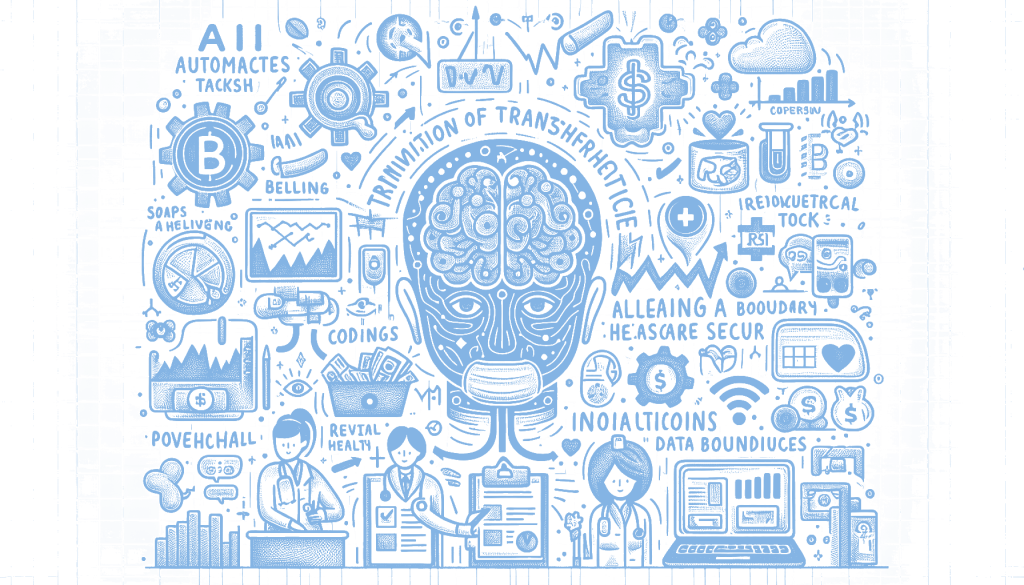
AI is set to transform healthcare by automating tasks such as medical note-taking from patient-provider interactions, which could alleviate administrative burdens on healthcare professionals. It is also expected to enhance billing and coding processes, reducing errors and uncovering missed revenue opportunities. Specialized AI tools will likely access specific medical records for tailored advice, while advancements in AI diagnostics and medical imaging will aid in condition diagnosis, though human oversight will remain essential. Additionally, AI trained on medical data could improve handling of medical terminology and reduce clinical documentation errors, potentially decreasing the high number of medical errors that lead to fatalities each year. This matters because integrating AI into healthcare could lead to more efficient, accurate, and safer medical practices, ultimately improving patient outcomes.
Artificial Intelligence (AI) is on the brink of transforming the healthcare landscape, promising to streamline operations and enhance patient care. One of the most promising applications is AI’s ability to automate the creation of medical notes from patient-provider interactions. This innovation could alleviate the significant administrative burden faced by healthcare professionals, allowing them to focus more on patient care rather than paperwork. By efficiently generating accurate documentation, AI could also improve the quality of patient records, leading to better-informed healthcare decisions.
In the realm of billing, coding, and revenue cycle management, AI offers the potential to optimize processes and minimize errors. This could lead to more accurate billing, reducing the likelihood of costly mistakes and identifying previously overlooked revenue opportunities. By automating these complex tasks, healthcare providers could see improved financial health, which in turn could enhance the overall quality of care provided to patients. The reduction in administrative errors could also contribute to a more transparent and efficient healthcare system.
AI’s role in diagnostics and medical imaging is another area ripe for advancement. With its ability to analyze medical images and assist in diagnosing conditions, AI could revolutionize the speed and accuracy of diagnoses. However, human oversight remains crucial to ensure these AI-driven insights are applied correctly and ethically. As AI continues to develop, domain-specific language models trained on medical data could further enhance its ability to understand and process medical terminology, reducing errors in clinical documentation and improving patient outcomes.
Despite its potential, the integration of AI in healthcare is not without challenges. The reduction of medical errors, which contribute significantly to patient mortality, is a key area where AI could make a substantial impact. However, ethical considerations, data privacy, and the need for robust oversight mechanisms are critical as AI becomes more embedded in healthcare. Engaging with communities and discussions, such as those found on platforms like Reddit, can provide valuable insights into the evolving landscape of AI in healthcare, helping stakeholders navigate the complexities and harness the full potential of these technologies.
Read the original article here
Comments
2 responses to “AI’s Impact on Healthcare Transformation”
The potential for AI to streamline administrative tasks and improve accuracy in billing and coding is a significant step forward in addressing the inefficiencies in healthcare systems. By reducing the time spent on documentation, healthcare professionals can focus more on patient care, potentially improving outcomes. However, considering the reliance on data quality for AI effectiveness, what measures are being implemented to ensure the data used for training these AI systems is both comprehensive and unbiased?
Ensuring data quality and mitigating bias in AI systems is crucial for their effectiveness in healthcare. One approach is incorporating diverse datasets and continuously updating them to reflect the latest medical insights. Additionally, implementing robust validation processes and involving interdisciplinary teams in AI development can help address these challenges. For more detailed insights, you might want to refer to the original article linked in the post.