
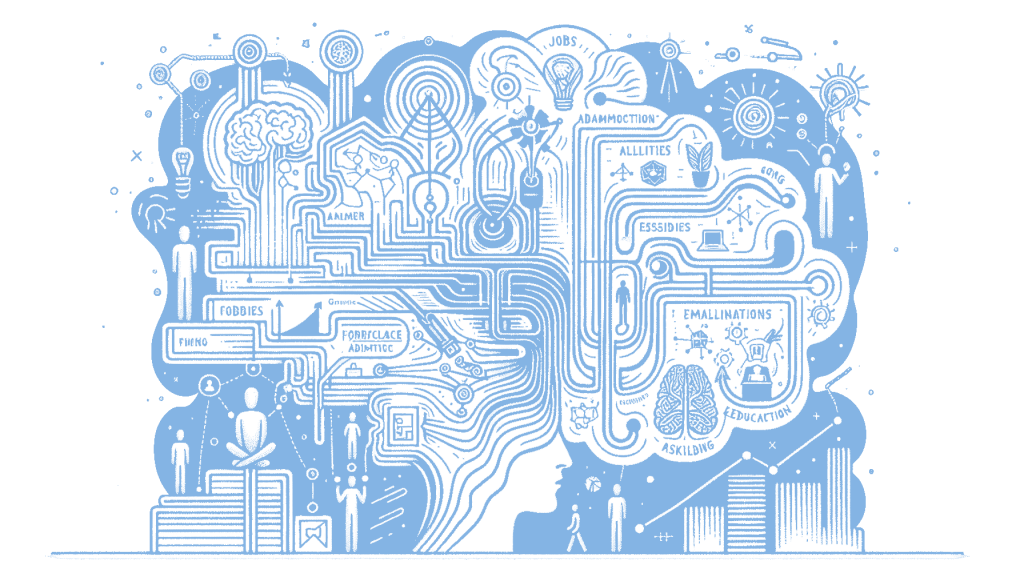
The discussion around Artificial Intelligence (AI) and its impact on job markets reveals a spectrum of opinions. Concerns about AI-induced job displacement are prevalent, particularly in specific sectors, yet there is optimism about AI creating new job opportunities and necessitating workforce adaptation. Despite AI’s potential, its limitations and reliability issues may prevent it from fully replacing human roles. Additionally, some argue that economic factors, rather than AI, are driving current job market changes, while others explore the societal and cultural implications of AI on work and human value. This matters because understanding AI’s impact on employment can guide policy and workforce development strategies.
The conversation around Artificial Intelligence (AI) and its effect on the job market is multifaceted, with opinions ranging from alarmist to hopeful. There is a growing concern that AI could lead to significant job displacement, particularly in sectors that rely heavily on routine and repetitive tasks. Automation through AI could potentially replace jobs in manufacturing, customer service, and even some areas of healthcare. This potential for job loss is a critical issue because it affects economic stability and individual livelihoods. The fear is that without a strategic and gradual implementation, the workforce could face massive unemployment, leading to increased economic disparity.
On the flip side, AI is also seen as a catalyst for new job creation and workforce adaptation. As AI takes over more mundane tasks, it could free up human labor for more complex, creative, and interpersonal roles. This shift would require workers to upskill and adapt to new technologies, leading to a more dynamic and flexible job market. The introduction of AI could spur innovation and create entirely new industries and roles that we have yet to imagine. The key is to ensure that the workforce is prepared for these changes through education and training programs that focus on digital literacy and technical skills.
Despite the potential for AI to revolutionize the job market, it is not without its limitations. AI systems can be prone to errors and biases, which can limit their effectiveness in fully replacing human workers. There are also reliability issues that need to be addressed to ensure that AI can be trusted to perform critical tasks without human oversight. This highlights the importance of developing AI systems that are transparent, accountable, and aligned with human values. Ensuring that AI complements rather than replaces human labor is crucial to mitigating the risks of job displacement.
The impact of AI on employment is not solely determined by technological advancements but is also influenced by broader economic and market factors. Economic downturns, globalization, and shifts in consumer behavior can all play significant roles in shaping the job market. Additionally, the societal and cultural implications of AI on work and human value are profound. As AI becomes more integrated into our daily lives, it challenges our perceptions of work, productivity, and human worth. This underscores the need for thoughtful and inclusive policy-making that considers the diverse impacts of AI on society. By addressing these issues proactively, we can harness the benefits of AI while minimizing its potential downsides.
Read the original article here
Comments
2 responses to “AI’s Impact on Job Markets: A Balanced View”
The post provides a well-rounded perspective on AI’s impact on job markets, yet it might understate the role of education and reskilling initiatives in mitigating job displacement. A more detailed exploration of how educational institutions and governments can proactively address these challenges could strengthen the argument. How do you envision the collaboration between tech companies and educational sectors in preparing the workforce for AI-related changes?
The post suggests that education and reskilling are crucial for mitigating job displacement caused by AI. Collaboration between tech companies and educational sectors could involve creating specialized training programs and updating curricula to focus on AI-related skills. By doing so, the workforce can be better prepared for the evolving job market.