
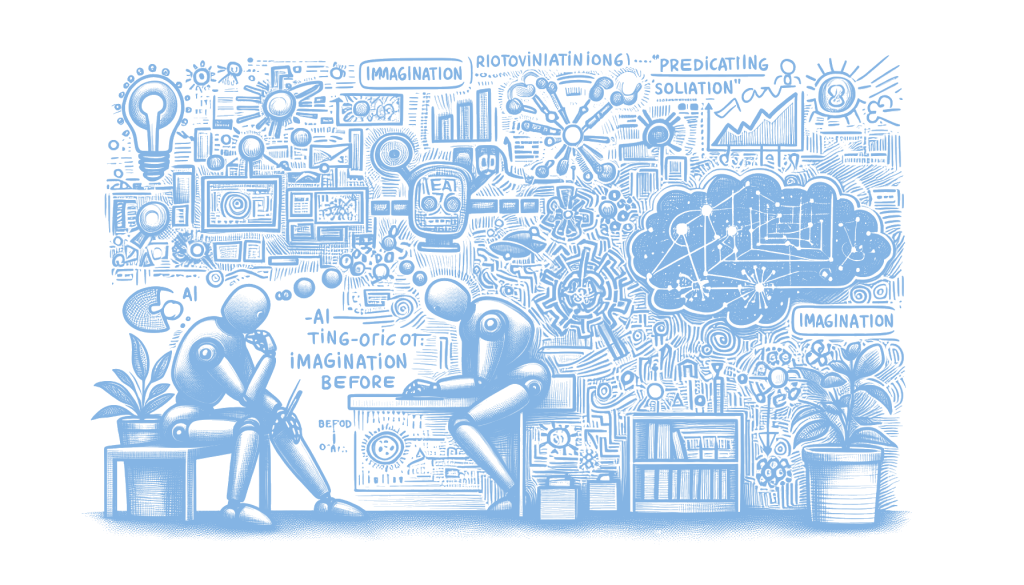
Stanford’s new AI framework, Dream2Flow, allows robots to “imagine” tasks before executing them, potentially transforming how robots interact with their environment. This innovation aims to enhance robotic efficiency and decision-making by simulating various scenarios before taking action, thereby reducing errors and improving task execution. The framework addresses concerns about AI’s impact on job markets by highlighting its potential as an augmentation tool rather than a replacement, suggesting that AI can create new job opportunities while requiring workers to adapt to evolving roles. Understanding AI’s limitations and reliability issues is crucial, as it ensures that AI complements human efforts rather than fully replacing them, fostering a balanced integration into the workforce. This matters because it highlights the potential for AI to enhance human capabilities and create new job opportunities, rather than simply displacing existing roles.
The development of Dream2Flow, a new AI framework from Stanford, represents a significant leap forward in robotics. This framework allows robots to “imagine” tasks before executing them, potentially revolutionizing how robots interact with their environment. By simulating tasks in a virtual space, robots can predict outcomes and optimize their actions, leading to improved efficiency and effectiveness. This capability is akin to human problem-solving, where envisioning potential solutions before acting can lead to better decision-making.
This advancement is particularly relevant in the context of ongoing debates about AI’s impact on job markets. While there are concerns about AI’s potential to displace jobs, innovations like Dream2Flow also highlight AI’s potential to augment human capabilities. By enabling robots to perform tasks more autonomously and efficiently, AI can take over repetitive or dangerous tasks, allowing humans to focus on more complex and creative work. This shift could lead to the creation of new job roles that require oversight of AI systems and the development of innovative solutions.
However, the implementation of AI in the workforce is not without its challenges. Concerns about AI’s limitations and reliability persist, as the technology is not infallible. Mistakes in task execution or misinterpretation of data can have significant consequences, particularly in industries where precision is crucial. Therefore, while AI frameworks like Dream2Flow hold promise, they also necessitate robust oversight and continuous improvement to ensure their effectiveness and safety in real-world applications.
Beyond the technical and economic implications, the societal and cultural impact of AI developments like Dream2Flow cannot be overlooked. As AI becomes more integrated into daily life, it will inevitably influence how we perceive work and human value. The ability of robots to perform tasks traditionally done by humans raises important questions about identity, purpose, and the future of human labor. Engaging with these questions is crucial as society navigates the balance between embracing technological advancements and preserving the human elements of work that define our culture and values.
Read the original article here
Comments
2 responses to “Dream2Flow: Stanford’s AI Framework for Robots”
While Dream2Flow presents an exciting advancement in robotic capabilities, it would be beneficial to consider the potential challenges of integrating such AI frameworks into existing robotic systems, especially in industries with rigid operational protocols. Exploring how Dream2Flow’s simulation capabilities can be tailored or scaled for specific sectors might strengthen the claim about its transformative potential. Could you elaborate on how Dream2Flow addresses the issue of compatibility with diverse robotic architectures and existing infrastructures?
The post suggests that Dream2Flow is designed with adaptability in mind, making it compatible with a range of robotic architectures by allowing customization of its simulation capabilities. This flexibility could help in integrating the framework into existing systems across various industries. For more detailed insights into specific integration methods, you might want to refer to the original article linked in the post or contact the authors directly.