
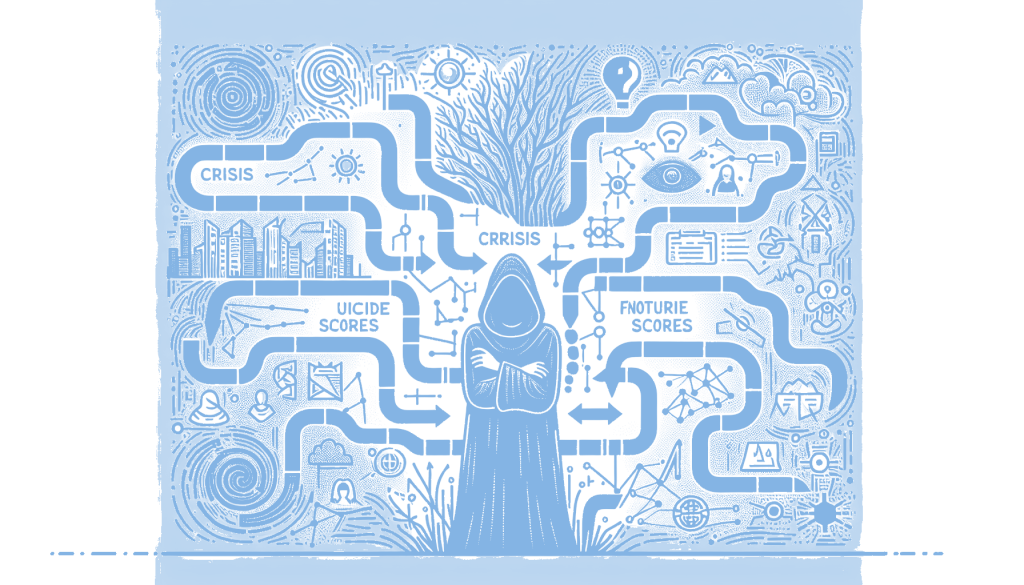
A recent study utilized the Llama-3.1-8B language model to predict suicide risk by analyzing perplexity scores from narratives about individuals’ future selves. By generating two potential future scenarios—one involving a crisis and one without—and assessing which was more linguistically plausible based on interview transcripts, researchers could identify individuals at high risk for suicidal ideation. Remarkably, this method identified 75% of high-risk individuals that traditional medical questionnaires missed, demonstrating the potential for language models to enhance early detection of mental health risks. This matters because it highlights a novel approach to improving mental health interventions and potentially saving lives through advanced AI analysis.
Predicting suicide risk is a complex and critical challenge in mental health care. The use of Llama-3.1-8B, a language model, to predict suicide risk 18 months in advance by analyzing perplexity scores represents a significant advancement in this field. Perplexity, in this context, refers to the model’s measure of surprise when processing text; lower perplexity indicates higher predictability or plausibility of a narrative. By evaluating which of two future narratives—one involving a crisis and one without—was more likely according to the model, researchers could identify individuals at higher risk of suicidal ideation.
The approach involved generating two potential future scenarios for each participant using Claude Sonnet, a narrative generation tool. These scenarios were then assessed by Llama-3.1-8B to determine which was more linguistically plausible based on the participant’s interview transcript. The study found that when the narrative involving a crisis was deemed more plausible, those individuals were significantly more likely to experience suicidal ideation 18 months later. Impressively, this method identified 75% of high-risk individuals that traditional suicide risk assessments missed, highlighting the potential of AI in enhancing mental health diagnostics.
This matters because traditional methods of assessing suicide risk often rely on self-reported questionnaires, which can be limited by factors such as stigma, misunderstanding, or reluctance to disclose true feelings. By utilizing AI to analyze language patterns, mental health professionals can gain a more objective and potentially earlier indication of risk, allowing for timely intervention. This is particularly crucial as early detection and intervention can significantly impact outcomes for individuals at risk of suicide.
The research opens up new avenues for integrating advanced AI models into mental health care, though it also points to the need for further refinement and exploration of different models. The potential to improve the pipeline and explore larger or more reasoning-capable models could enhance the accuracy and applicability of such tools. As the field advances, collaboration between AI specialists and mental health professionals will be essential to ensure these technologies are both effective and ethically applied. The findings underscore the importance of continued innovation and cross-disciplinary efforts to address the pressing issue of suicide prevention.
Read the original article here
Comments
4 responses to “Predicting Suicide Risk with Llama-3.1-8B”
The use of Llama-3.1-8B for predicting suicide risk is an intriguing advancement in mental health assessment. While the model’s ability to identify high-risk individuals missed by traditional methods is impressive, how do researchers plan to address ethical concerns related to privacy and consent when analyzing sensitive personal narratives?
The post suggests that researchers are aware of the ethical concerns and are considering measures to ensure privacy and informed consent when analyzing sensitive narratives. Specific strategies weren’t detailed in the excerpt, so for more information, I recommend checking the original article linked in the post or reaching out to the study’s authors directly.
The post indicates that the researchers are actively considering privacy and consent issues, but details on specific strategies weren’t included. For more comprehensive insights, it would be best to review the original article or contact the study’s authors directly for clarification.
The post suggests that researchers are indeed considering privacy and consent issues, but it doesn’t delve into specific strategies. For more detailed information, it would be best to review the original article linked in the post or reach out to the study’s authors for further clarification.