
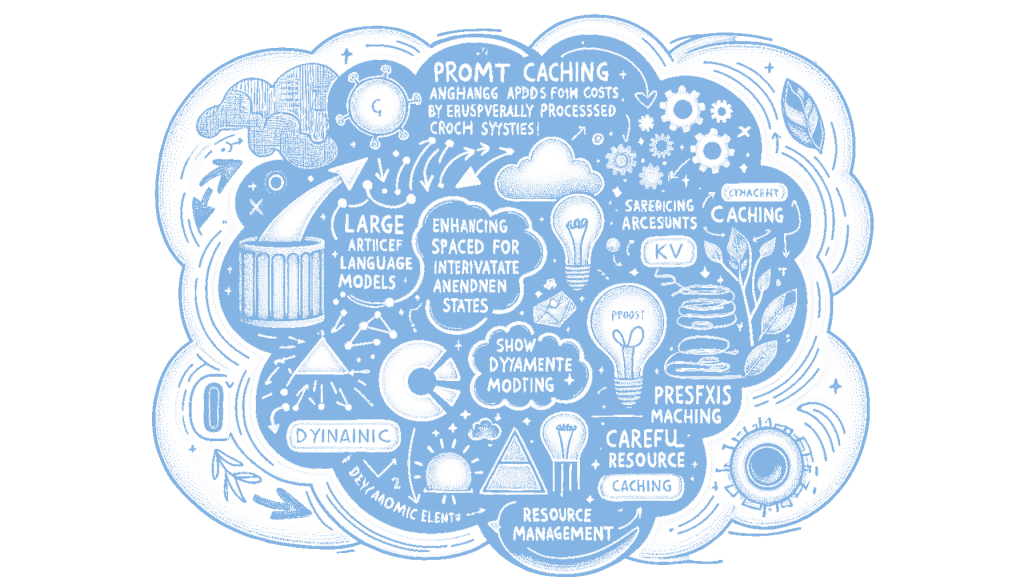
Prompt caching is an optimization technique in AI systems designed to enhance speed and reduce costs by reusing previously processed prompt content. This method involves storing static instructions, prompt prefixes, or shared context, which prevents the need to repeatedly process the same information. For instance, in applications like travel planning assistants or coding assistants, similar user requests often have semantically similar structures, allowing the system to reuse cached data rather than starting from scratch each time. The technique relies on Key–Value (KV) caching, where intermediate attention states are stored in GPU memory, enabling efficient reuse of data and reducing latency and computational expenses. Effective prompt structuring and monitoring cache hit rates can significantly improve efficiency, though considerations around GPU memory usage and cache eviction strategies are necessary as usage scales. This matters as it provides a way to manage computational resources more efficiently, ultimately leading to cost savings and improved response times in AI applications.
Prompt caching is a crucial optimization technique in AI systems, particularly when dealing with large language models (LLMs). The primary goal is to enhance speed and reduce costs by reusing previously processed prompt content. This is especially relevant when user inputs, although textually different, are semantically similar. For instance, in applications like travel planning assistants, users might request itineraries with slight variations in phrasing, but the underlying intent remains consistent. Without optimization, each request would require the model to process the entire prompt anew, thereby increasing computation time and costs. Prompt caching mitigates this by storing and reusing parts of the prompt that remain unchanged, ensuring faster and more cost-effective responses without compromising on quality.
At the core of prompt caching is the concept of Key–Value (KV) caching, which involves storing intermediate attention states in GPU memory. This allows the model to bypass recomputation of these states for repeated elements across requests. For example, in a coding assistant scenario, a fixed instruction such as “You are an expert Python code reviewer” can be cached after initial processing. Subsequent requests can then leverage these stored KV states, focusing only on the new user input, such as a code snippet. This method is extended through prefix caching, where identical prefixes in prompts are recognized and skipped over in future computations, significantly optimizing performance in systems like chatbots and agents.
To maximize the benefits of prompt caching, it’s essential to structure prompts efficiently. Placing system instructions and shared context at the beginning of the prompt allows for higher cache efficiency. Dynamic elements like timestamps or random formatting should be avoided in these sections, as they can disrupt the caching process. Consistent serialization of structured data further prevents unnecessary cache misses. Regular monitoring of cache hit rates and grouping similar requests can enhance efficiency, especially at scale. This structured approach ensures that reusable context is maintained, reducing the need for repeated computation and thus lowering latency and API costs.
While prompt caching offers substantial benefits, it also introduces certain challenges, particularly concerning resource management. KV caches consume GPU memory, which is a finite resource. As usage scales, strategies like cache eviction or memory tiering become necessary to maintain a balance between performance gains and resource limitations. The overarching aim is to reduce redundant computation while maintaining the quality of responses. For applications with lengthy and repetitive prompts, prefix-based reuse can yield significant savings. However, careful management of resources and strategic structuring of prompts are essential to fully capitalize on the advantages of prompt caching in AI systems.
Read the original article here
Comments
2 responses to “Understanding Prompt Caching in AI Systems”
While the post provides a comprehensive overview of prompt caching, it seems to primarily focus on the technical benefits without addressing potential challenges such as cache invalidation or handling edge cases where cached data might lead to incorrect responses. Exploring these aspects could offer a more balanced perspective on the technique’s applicability. How do AI systems ensure the accuracy and reliability of responses when dealing with dynamic and unpredictable user input?
The post indeed highlights the advantages of prompt caching, but you’re right that challenges like cache invalidation and edge cases are crucial considerations. AI systems often use strategies like time-to-live (TTL) for cache entries and context-aware caching to maintain accuracy and reliability. For dynamic input, systems may include mechanisms to detect changes in context and refresh caches as needed. For more detailed insights, I recommend checking the original article linked in the post.