
machine learning
-
Free Interactive Course on Diffusion Models
Read Full Article: Free Interactive Course on Diffusion Models An interactive course has been developed to make understanding diffusion models more accessible, addressing the gap between overly simplistic explanations and those requiring advanced knowledge. This course includes seven modules and 90 challenges designed to engage users actively in learning, without needing a background in machine learning. It is free, open source, and encourages feedback to improve clarity and difficulty balance. This matters because it democratizes access to complex machine learning concepts, empowering more people to engage with and understand cutting-edge technology.
-
BareGPT: A Numpy-Based Transformer with Live Attention
Read Full Article: BareGPT: A Numpy-Based Transformer with Live Attention BareGPT is a new transformer model similar to NanoGPT, implemented entirely in Numpy, offering a unique approach to machine learning with live attention visualization. This development showcases the versatility of Numpy in creating efficient machine learning models without relying on more complex frameworks. The transformer model provides insights into attention mechanisms, which are crucial for understanding how models process and prioritize input data. This matters because it highlights the potential for simpler, more accessible tools in machine learning, making advanced techniques more approachable for a broader audience.
-
PolyInfer: Unified Inference API for Vision Models
Read Full Article: PolyInfer: Unified Inference API for Vision Models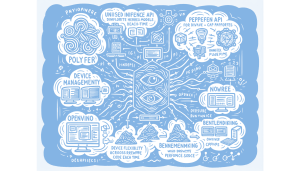 PolyInfer is a unified inference API designed to streamline the deployment of vision models across various hardware backends such as ONNX Runtime, TensorRT, OpenVINO, and IREE without the need to rewrite code for each platform. It simplifies dependency management and supports multiple devices, including CPUs, GPUs, and NPUs, by allowing users to install specific packages for NVIDIA, Intel, AMD, or all supported hardware. Users can load models, benchmark performance, and compare backend efficiencies with a single API, making it highly versatile for different machine learning tasks. The platform supports various operating systems and environments, including Windows, Linux, WSL2, and Google Colab, and is open-source under the Apache 2.0 license. This matters because it significantly reduces the complexity and effort required to deploy machine learning models across diverse hardware environments, enhancing accessibility and efficiency for developers.
-
Migrate MLflow to SageMaker AI with Serverless MLflow
Read Full Article: Migrate MLflow to SageMaker AI with Serverless MLflow Managing a self-hosted MLflow tracking server can be cumbersome due to the need for server maintenance and resource scaling. Transitioning to Amazon SageMaker AI's serverless MLflow can alleviate these challenges by automatically adjusting resources based on demand, eliminating server maintenance tasks, and optimizing costs. The migration process involves exporting MLflow artifacts, configuring a new MLflow App on SageMaker, and importing the artifacts using the MLflow Export Import tool. This tool also supports version upgrades and disaster recovery, providing a streamlined approach to managing MLflow resources. This migration matters as it reduces operational overhead and integrates seamlessly with SageMaker's AI/ML services, enhancing efficiency and scalability for organizations.
-
TensorFlow 2.17 Updates
Read Full Article: TensorFlow 2.17 Updates TensorFlow 2.17 introduces significant updates, including a CUDA update that enhances performance on Ada-Generation GPUs like NVIDIA RTX 40**, L4, and L40, while dropping support for older Maxwell GPUs to keep Python wheel sizes manageable. The release also prepares for the upcoming TensorFlow 2.18, which will support Numpy 2.0, potentially affecting some edge cases in API usage. Additionally, TensorFlow 2.17 marks the last version to include TensorRT support, as future releases will no longer support it. These changes reflect ongoing efforts to optimize TensorFlow for modern hardware and software environments, ensuring better performance and compatibility.
-
Four Ways to Run ONNX AI Models on GPU with CUDA
Read Full Article: Four Ways to Run ONNX AI Models on GPU with CUDA Running ONNX AI models on GPUs with CUDA can be achieved through four distinct methods, enhancing flexibility and performance for machine learning operations. These methods include using ONNX Runtime with CUDA execution provider, leveraging TensorRT for optimized inference, employing PyTorch with its ONNX export capabilities, and utilizing the NVIDIA Triton Inference Server for scalable deployment. Each approach offers unique advantages, such as improved speed, ease of integration, or scalability, catering to different needs in AI model deployment. Understanding these options is crucial for optimizing AI workloads and ensuring efficient use of GPU resources.
-
Boosting GPU Utilization with WoolyAI’s Software Stack
Read Full Article: Boosting GPU Utilization with WoolyAI’s Software Stack Traditional GPU job orchestration often leads to underutilization due to the one-job-per-GPU approach, which leaves GPU resources idle when not fully saturated. WoolyAI's software stack addresses this by allowing multiple jobs to run concurrently on a single GPU with deterministic performance, dynamically managing the GPU's streaming multiprocessors (SMs) to ensure full utilization. This approach not only maximizes GPU efficiency but also supports running machine learning jobs on CPU-only infrastructure by executing kernels remotely on a shared GPU pool. Additionally, it allows existing CUDA PyTorch jobs to run seamlessly on AMD hardware without modifications. This matters because it significantly increases GPU utilization and efficiency, potentially reducing costs and improving performance in computational tasks.
-
MayimFlow: Preventing Data Center Water Leaks
Read Full Article: MayimFlow: Preventing Data Center Water Leaks MayimFlow, a startup founded by John Khazraee, aims to prevent water leaks in data centers before they occur, using IoT sensors and machine learning models to provide early warnings. Data centers, which consume significant amounts of water, face substantial risks from even minor leaks, potentially leading to costly downtime and disruptions. Khazraee, with a background in infrastructure for major tech companies, has assembled a team experienced in data centers and water management to tackle this challenge. The company envisions expanding its leak detection solutions beyond data centers to other sectors like commercial buildings and hospitals, emphasizing the growing importance of water management in various industries. This matters because proactive leak detection can save companies significant resources and prevent disruptions in critical operations.
-
Exploring Smaller Cloud GPU Providers
Read Full Article: Exploring Smaller Cloud GPU Providers Exploring smaller cloud GPU providers like Octaspace can offer a streamlined and cost-effective alternative for specific workloads. Octaspace impresses with its user-friendly interface and efficient one-click deployment flow, allowing users to quickly set up environments with pre-installed tools like CUDA and PyTorch. While the pricing is not the cheapest, it is more reasonable compared to larger providers, making it a viable option for budget-conscious MLOps tasks. Stability and performance have been reliable, and the possibility of obtaining test tokens through community channels adds an incentive for experimentation. This matters because finding efficient and affordable cloud solutions can significantly impact the scalability and cost management of machine learning projects.
-
Converging Representations in Scientific Models
Read Full Article: Converging Representations in Scientific Models Machine learning models from diverse modalities and architectures are being trained to predict molecular, material, and protein behaviors, yet it's unclear if they develop similar internal representations of matter. Research shows that nearly sixty scientific models, including string-, graph-, 3D atomistic, and protein-based modalities, exhibit highly aligned representations across various chemical systems. Despite different training datasets, models converge in representation space as they improve, suggesting a common underlying representation of physical reality. However, when faced with unfamiliar inputs, models tend to collapse into low-information states, indicating current limitations in training data and inductive biases. This research highlights representational alignment as a benchmark for evaluating the generality of scientific models, with implications for tracking universal representations and improving model transferability across scientific tasks. Understanding the convergence of representations in scientific models is crucial for developing reliable foundation models that generalize beyond their training data.