
Python
-
Choosing the Right Language for AI/ML Projects
Read Full Article: Choosing the Right Language for AI/ML Projects Choosing the right programming language is essential for machine learning projects, with Python leading the way due to its simplicity, extensive libraries, and strong community support. Python's ease of use and rich ecosystem make it ideal for interactive development, while its libraries leverage optimized C/C++ and GPU kernels for performance. Other languages like C++, Java, Kotlin, R, Julia, Go, and Rust also play significant roles, offering unique advantages such as performance, scalability, statistical analysis, and concurrency features. The selection of a language should align with the specific requirements and performance needs of the project. Understanding the strengths and weaknesses of each language can help in building efficient and effective AI/ML solutions.
-
WhisperNote: Local Transcription App for Windows
Read Full Article: WhisperNote: Local Transcription App for Windows WhisperNote is a Windows desktop application designed for local audio transcription using OpenAI Whisper, emphasizing simplicity and privacy. It allows users to either record audio directly or upload an audio file to receive a text transcription, with all processing conducted offline on the user's machine. This ensures no reliance on cloud services or the need for user accounts, aligning with a minimalistic and local-first approach. Although the Windows build is approximately 4 GB due to bundled dependencies like Python, PyTorch with CUDA, and FFmpeg, it provides a comprehensive offline experience. This matters because it offers a straightforward and private solution for users seeking a reliable transcription tool without internet dependency.
-
GLM4.7 + CC: A Cost-Effective Coding Tool
Read Full Article: GLM4.7 + CC: A Cost-Effective Coding Tool GLM4.7 + CC is proving to be a competent tool, comparable to 4 Sonnet, and is particularly effective for projects involving both Python backend and TypeScript frontend. It successfully managed to integrate a new feature without any issues, such as the previously common problem of MCP calls getting stuck. Although there remains a significant performance gap between GLM4.7 + CC and the more advanced 4.5 Opus, the former is sufficient for regular tasks, making it a cost-effective choice at $100/month, supplemented by a $10 GitHub Copilot subscription for more complex challenges. This matters because it highlights the evolving capabilities and cost-effectiveness of AI tools in software development, allowing developers to choose solutions that best fit their needs and budgets.
-
FlakeStorm: Chaos Engineering for AI Agent Testing
Read Full Article: FlakeStorm: Chaos Engineering for AI Agent Testing![[P] FlakeStorm: Chaos Engineering for AI Agent Testing (Apache 2.0, Rust-accelerated)](https://www.tweakedgeek.com/wp-content/uploads/2026/01/featured-article-8197-300x171.png) FlakeStorm is an open-source testing engine designed to enhance AI agent testing by incorporating chaos engineering principles. It addresses the limitations of current testing methods, which often overlook non-deterministic behaviors and system-level failures, by introducing chaos injection as a primary testing strategy. The engine generates semantic mutations across various categories such as paraphrasing, noise, tone shifts, and adversarial inputs to test AI agents' robustness under adversarial and edge case conditions. FlakeStorm's architecture complements existing testing tools, offering a comprehensive approach to AI agent reliability and security, and is built with Python for compatibility, with optional Rust extensions for performance improvements. This matters because it provides a more thorough testing framework for AI agents, ensuring they perform reliably even under unpredictable conditions.
FlakeStorm is an open-source testing engine designed to enhance AI agent testing by incorporating chaos engineering principles. It addresses the limitations of current testing methods, which often overlook non-deterministic behaviors and system-level failures, by introducing chaos injection as a primary testing strategy. The engine generates semantic mutations across various categories such as paraphrasing, noise, tone shifts, and adversarial inputs to test AI agents' robustness under adversarial and edge case conditions. FlakeStorm's architecture complements existing testing tools, offering a comprehensive approach to AI agent reliability and security, and is built with Python for compatibility, with optional Rust extensions for performance improvements. This matters because it provides a more thorough testing framework for AI agents, ensuring they perform reliably even under unpredictable conditions.
-
Real-Time Fall Detection with MediaPipe Pose
Read Full Article: Real-Time Fall Detection with MediaPipe Pose Python is the dominant language for machine learning, favored for its simplicity, extensive libraries, and strong community support, making it ideal for interactive development and leveraging optimized C/C++ and GPU kernels. Other languages like C++, Java, Kotlin, R, Julia, Go, and Rust also play important roles depending on specific use cases; for instance, C++ is crucial for performance-critical tasks, Java and Kotlin are preferred in enterprise environments, R excels in statistical analysis and data visualization, Julia combines ease of use with performance, Go is noted for concurrency, and Rust offers memory safety. The choice of programming language in machine learning should align with the project's requirements and performance needs, highlighting the importance of understanding the strengths and weaknesses of each language. This matters because selecting the appropriate programming language can significantly impact the efficiency and success of machine learning projects.
-
Deep Research Agent: Autonomous AI System
Read Full Article: Deep Research Agent: Autonomous AI System The Deep Research Agent system enhances AI research by employing a multi-agent architecture that mimics human analytical processes. It consists of four specialized agents: the Planner, who devises a strategic research plan; the Searcher, who autonomously retrieves high-value content; the Synthesizer, who aggregates and prioritizes sources based on credibility; and the Writer, who compiles a structured report with proper citations. A unique feature is the credibility scoring mechanism, which assigns scores to sources to minimize misinformation and ensure that only high-quality information influences the results. This system is built using Python and tools like LangGraph and LangChain, offering a more rigorous approach to AI-assisted research. This matters because it addresses the challenge of misinformation in AI research by ensuring the reliability and credibility of sources used in analyses.
-
Evaluating LLMs in Code Porting Tasks
Read Full Article: Evaluating LLMs in Code Porting Tasks The recent discussion about replacing C and C++ code at Microsoft with automated solutions raises questions about the current capabilities of Large Language Models (LLMs) in code porting tasks. While LLMs have shown promise in generating simple applications and debugging, achieving the ambitious goal of automating the translation of complex codebases requires more than just basic functionality. A test using a JavaScript program with an unconventional prime-checking function revealed that many LLMs struggle to replicate the code's behavior, including its undocumented features and optimizations, when ported to languages like Python, Haskell, C++, and Rust. The results indicate that while some LLMs can successfully port code to certain languages, challenges remain in maintaining identical functionality, especially with niche languages and complex code structures. This matters because it highlights the limitations of current AI tools in fully automating code translation, which is critical for software development and maintenance.
-
Simple ML Digit Classifier in Vanilla Python
Read Full Article: Simple ML Digit Classifier in Vanilla Python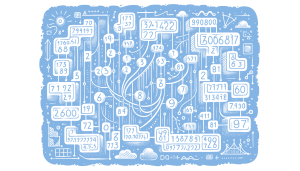 A simple digit classifier has been developed as a toy project using vanilla Python, without relying on libraries like PyTorch. This project aims to provide a basic understanding of how a neural network functions. It includes a command line interface for training and predicting, allowing users to specify the number of training loops, or epochs, to observe the model's predictions over time. This matters because it offers an accessible way to learn the fundamentals of neural networks and machine learning through hands-on experience with basic Python coding.
-
Build a Deep Learning Library with Python & NumPy
Read Full Article: Build a Deep Learning Library with Python & NumPy![Learn to build a Deep Learning library from scratch in Python and NumPy (autograd, CNNs, ResNets) [free]"](https://www.tweakedgeek.com/wp-content/uploads/2026/01/featured-article-7756-300x171.png) This project offers a comprehensive guide to building a deep learning library from scratch using Python and NumPy, aiming to demystify the complexities of modern frameworks. Key components include creating an autograd engine for automatic differentiation, constructing neural network modules with layers and activations, implementing optimizers like SGD and Adam, and developing a training loop for model persistence and dataset handling. Additionally, it covers the construction and training of Convolutional Neural Networks (CNNs), providing a conceptual and educational resource rather than a production-ready framework. Understanding these foundational elements is crucial for anyone looking to deepen their knowledge of deep learning and its underlying mechanics.
This project offers a comprehensive guide to building a deep learning library from scratch using Python and NumPy, aiming to demystify the complexities of modern frameworks. Key components include creating an autograd engine for automatic differentiation, constructing neural network modules with layers and activations, implementing optimizers like SGD and Adam, and developing a training loop for model persistence and dataset handling. Additionally, it covers the construction and training of Convolutional Neural Networks (CNNs), providing a conceptual and educational resource rather than a production-ready framework. Understanding these foundational elements is crucial for anyone looking to deepen their knowledge of deep learning and its underlying mechanics.
-
Choosing Programming Languages for Machine Learning
Read Full Article: Choosing Programming Languages for Machine Learning Choosing the right programming language is crucial for efficiency and performance in machine learning projects. Python is the most popular choice due to its ease of use, extensive libraries, and strong community support, making it ideal for prototyping and developing machine learning models. Other notable languages include R for statistical analysis, Julia for high-performance tasks, C++ for performance-critical applications, Scala for big data processing, Rust for memory safety, and Kotlin for its Java interoperability. Engaging with online communities can provide valuable insights and support for those looking to deepen their understanding of machine learning. This matters because selecting an appropriate programming language can significantly enhance the development process and effectiveness of machine learning solutions.