
Tools
-
US Mortgage OCR System Achieves 96% Accuracy
Read Full Article: US Mortgage OCR System Achieves 96% Accuracy![[D] Built a US Mortgage Underwriting OCR System With 96% Real-World Accuracy → Saved ~$2M Per Year](https://www.tweakedgeek.com/wp-content/uploads/2026/01/featured-article-8295-300x171.png) A custom-built document processing system for a US mortgage underwriting firm has achieved around 96% field-level accuracy in real-world applications, significantly surpassing the typical 70-72% accuracy of standard OCR services. This system was specifically designed to handle US mortgage underwriting documents such as Form 1003, W-2s, and tax returns, using layout-aware extraction and document-specific validation. The improvements have led to a 65-75% reduction in manual review efforts, decreased turnaround times from 24-48 hours to 10-30 minutes per file, and saved approximately $2 million annually in operational costs. The success underscores that many AI accuracy issues in mortgage underwriting are rooted in data extraction challenges, and addressing these can lead to substantial efficiency gains and cost savings. Why this matters: Improving data extraction accuracy in mortgage underwriting can drastically reduce costs and processing times, enhancing efficiency and competitiveness in the lending industry.
A custom-built document processing system for a US mortgage underwriting firm has achieved around 96% field-level accuracy in real-world applications, significantly surpassing the typical 70-72% accuracy of standard OCR services. This system was specifically designed to handle US mortgage underwriting documents such as Form 1003, W-2s, and tax returns, using layout-aware extraction and document-specific validation. The improvements have led to a 65-75% reduction in manual review efforts, decreased turnaround times from 24-48 hours to 10-30 minutes per file, and saved approximately $2 million annually in operational costs. The success underscores that many AI accuracy issues in mortgage underwriting are rooted in data extraction challenges, and addressing these can lead to substantial efficiency gains and cost savings. Why this matters: Improving data extraction accuracy in mortgage underwriting can drastically reduce costs and processing times, enhancing efficiency and competitiveness in the lending industry.
-
Emergent Attractor Framework: Streamlit App Launch
Read Full Article: Emergent Attractor Framework: Streamlit App Launch![[Project] Emergent Attractor Framework – now a Streamlit app for alignment & entropy research](https://www.tweakedgeek.com/wp-content/uploads/2026/01/featured-article-8289-300x171.png) The Emergent Attractor Framework, now available as a Streamlit app, offers a novel approach to alignment and entropy research. This tool allows users to engage with complex concepts through an interactive platform, facilitating a deeper understanding of how systems self-organize and reach equilibrium states. By providing a space for community interaction, the app encourages collaborative exploration and discussion, making it a valuable resource for researchers and enthusiasts alike. This matters because it democratizes access to advanced research tools, fostering innovation and collaboration in the study of dynamic systems.
The Emergent Attractor Framework, now available as a Streamlit app, offers a novel approach to alignment and entropy research. This tool allows users to engage with complex concepts through an interactive platform, facilitating a deeper understanding of how systems self-organize and reach equilibrium states. By providing a space for community interaction, the app encourages collaborative exploration and discussion, making it a valuable resource for researchers and enthusiasts alike. This matters because it democratizes access to advanced research tools, fostering innovation and collaboration in the study of dynamic systems.
-
Temporal LoRA: Dynamic Adapter Router for GPT-2
Read Full Article: Temporal LoRA: Dynamic Adapter Router for GPT-2![[Experimental] "Temporal LoRA": A dynamic adapter router that switches context (Code vs. Lit) with 100% accuracy. Proof of concept on GPT-2.](https://www.tweakedgeek.com/wp-content/uploads/2026/01/featured-article-8275-300x171.png) Temporal LoRA introduces a dynamic adapter router that allows models to switch between different contexts, such as coding and literature, with 100% accuracy. By training distinct LoRA adapters for different styles and implementing a "Time Mixer" network, the system can dynamically activate the appropriate adapter based on input context, maintaining model stability while allowing for flexible task switching. This approach provides a promising method for integrating Mixture of Experts (MoE) in larger models without the need for extensive retraining, enabling seamless "hot-swapping" of skills and enhancing multi-tasking capabilities. This matters because it offers a scalable solution for improving AI model adaptability and efficiency in handling diverse tasks.
Temporal LoRA introduces a dynamic adapter router that allows models to switch between different contexts, such as coding and literature, with 100% accuracy. By training distinct LoRA adapters for different styles and implementing a "Time Mixer" network, the system can dynamically activate the appropriate adapter based on input context, maintaining model stability while allowing for flexible task switching. This approach provides a promising method for integrating Mixture of Experts (MoE) in larger models without the need for extensive retraining, enabling seamless "hot-swapping" of skills and enhancing multi-tasking capabilities. This matters because it offers a scalable solution for improving AI model adaptability and efficiency in handling diverse tasks.
-
Enhancing Multi-Agent System Reliability
Read Full Article: Enhancing Multi-Agent System Reliability Managing multi-agent systems effectively requires moving beyond simple chatroom-style collaborations, which can lead to issues like politeness loops and non-deterministic behavior. Treating agents as microservices with a deterministic orchestration layer can improve reliability, especially in local setups. Implementing hub-and-spoke routing, rigid state machines, and a standard Agent Manifest can help streamline interactions and reduce errors. These strategies aim to enhance the efficiency and reliability of complex workflows involving multiple specialized agents. Understanding and implementing such structures is crucial for improving the scalability and predictability of multi-agent systems.
-
Guide: Running Llama.cpp on Android
Read Full Article: Guide: Running Llama.cpp on Android![Llama.cpp running on Android with Snapdragon 888 and 8GB of ram. Compiled/Built on device. [Guide/Tutorial]](https://www.tweakedgeek.com/wp-content/uploads/2026/01/featured-article-8272-300x171.png) Running Llama.cpp on an Android device with a Snapdragon 888 and 8GB of RAM involves a series of steps beginning with downloading Termux from F-droid. After setting up Termux, the process includes cloning the Llama.cpp repository, installing necessary packages like cmake, and building the project. Users need to select a quantized model from HuggingFace, preferably a 4-bit version, and configure the server command in Termux to launch the model. Once the server is running, it can be accessed via a web browser by navigating to 'localhost:8080'. This guide is significant as it enables users to leverage advanced AI models on mobile devices, enhancing accessibility and flexibility for developers and enthusiasts.
Running Llama.cpp on an Android device with a Snapdragon 888 and 8GB of RAM involves a series of steps beginning with downloading Termux from F-droid. After setting up Termux, the process includes cloning the Llama.cpp repository, installing necessary packages like cmake, and building the project. Users need to select a quantized model from HuggingFace, preferably a 4-bit version, and configure the server command in Termux to launch the model. Once the server is running, it can be accessed via a web browser by navigating to 'localhost:8080'. This guide is significant as it enables users to leverage advanced AI models on mobile devices, enhancing accessibility and flexibility for developers and enthusiasts.
-
Gradient Descent Visualizer Tool
Read Full Article: Gradient Descent Visualizer Tool A gradient descent visualizer is a tool designed to help users understand how the gradient descent algorithm works in optimizing functions. By visually representing the path taken by the algorithm to reach the minimum of a function, it allows learners and practitioners to gain insights into the convergence process and the impact of different parameters on the optimization. This matters because understanding gradient descent is crucial for effectively training machine learning models and improving their performance.
-
Raw Diagnostic Output for Global Constraints
Read Full Article: Raw Diagnostic Output for Global Constraints The discussed method focuses on providing a raw diagnostic output to determine if a structure is globally constrained, without involving factorization, semantics, or training. This approach is suggested for those who find value in separating these aspects, indicating it might be beneficial for specific analytical needs. The method is accessible for review and contribution through a public repository, encouraging community engagement and collaboration. This matters as it offers a streamlined and potentially efficient way to assess structural constraints without the complexity of additional computational processes.
-
Mui Board: A Minimalist Smart Home Controller
Read Full Article: Mui Board: A Minimalist Smart Home Controller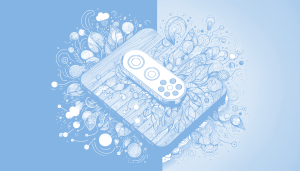 The Mui Board is a minimalist smart home controller crafted from wood, designed to seamlessly integrate technology into home environments without the usual distractions of screens and voice assistants. Functioning as a screenless touch interface, it supports Matter, Sonos, Hue, and other smart devices, allowing users to control lighting, music, and other home functions with simple, tactile interactions. While its design and concept are praised for their calm and harmonious approach, the high price point and limited functionality may not appeal to the mass market. However, for those seeking a unique and aesthetically pleasing smart home solution, the Mui Board offers a refreshing alternative to conventional smart displays. This matters because it represents a shift towards more integrated and less intrusive technology in our living spaces.
-
Rewind-cli: Ensuring Determinism in Local LLM Runs
Read Full Article: Rewind-cli: Ensuring Determinism in Local LLM Runs Rewind-cli is a new tool designed to ensure determinism in local LLM automation scripts by acting as a black-box recorder for terminal executions. It captures the output, error messages, and exit codes into a local folder and performs a strict byte-for-byte comparison on subsequent runs to detect any variations. Written in Rust, it operates entirely locally without relying on cloud services, which enhances privacy and control. The tool also supports a YAML mode for running test suites, making it particularly useful for developers working with llama.cpp and similar projects. This matters because it helps maintain consistency and reliability in automated processes, crucial for development and testing environments.
-
DeepSeek-V3’s ‘Hydra’ Architecture Explained
Read Full Article: DeepSeek-V3’s ‘Hydra’ Architecture Explained![[R] Understanding DeepSeek-V3's "Hydra" Architecture: How mHC prevents signal explosion](https://www.tweakedgeek.com/wp-content/uploads/2026/01/featured-article-8255-300x171.png) DeepSeek-V3 introduces the "Hydra" architecture, which splits the residual stream into multiple parallel streams or Hyper-Connections to prevent features from competing for space in a single vector. Initially, allowing these streams to interact caused signal energy to increase drastically, leading to unstable gradients. The solution involved using the Sinkhorn-Knopp algorithm to enforce energy conservation by ensuring the mixing matrix is doubly stochastic, akin to balancing guests and chairs at a dinner party. To address computational inefficiencies, custom kernels were developed to maintain data in GPU cache, and recomputation strategies were employed to manage memory usage effectively. This matters because it enhances the stability and efficiency of neural networks, allowing for more complex and powerful models.
DeepSeek-V3 introduces the "Hydra" architecture, which splits the residual stream into multiple parallel streams or Hyper-Connections to prevent features from competing for space in a single vector. Initially, allowing these streams to interact caused signal energy to increase drastically, leading to unstable gradients. The solution involved using the Sinkhorn-Knopp algorithm to enforce energy conservation by ensuring the mixing matrix is doubly stochastic, akin to balancing guests and chairs at a dinner party. To address computational inefficiencies, custom kernels were developed to maintain data in GPU cache, and recomputation strategies were employed to manage memory usage effectively. This matters because it enhances the stability and efficiency of neural networks, allowing for more complex and powerful models.