
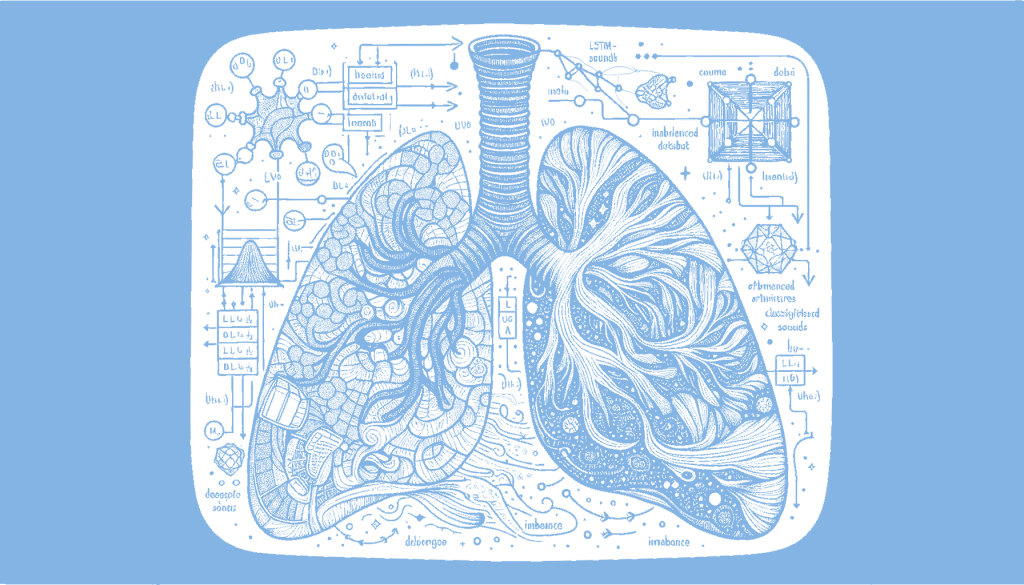
The investigation explores the use of hybrid Long Short-Term Memory (LSTM) and Knowledge Augmented Network (KAN) architectures for classifying respiratory sounds in imbalanced datasets. This approach aims to improve the accuracy and reliability of respiratory sound classification, which is crucial for medical diagnostics. By combining LSTM’s ability to handle sequential data with KAN’s knowledge integration, the study seeks to address the challenges posed by imbalanced data, potentially leading to better healthcare outcomes. This matters because improving diagnostic tools can lead to more accurate and timely medical interventions.
The investigation into respiratory sound classification using hybrid LSTM-KAN architectures addresses a crucial challenge in the medical field: the accurate and efficient diagnosis of respiratory conditions. This is particularly important given the prevalence of respiratory diseases and the need for timely intervention. The study focuses on handling imbalanced data sets, which are common in medical databases where certain conditions are far less frequent than others. This imbalance can skew the performance of machine learning models, leading to inaccurate predictions and potentially harmful clinical decisions.
The choice of deep learning framework is pivotal in developing models for such complex tasks. PyTorch is highlighted for its ease of use and strong community support, making it an attractive option for developers who prioritize a Pythonic approach and access to a wealth of resources. Its popularity ensures that developers can find ample example code and libraries to facilitate learning and implementation. This is particularly beneficial when dealing with complex architectures like LSTM-KAN, where understanding and modifying existing models can significantly enhance development speed and accuracy.
On the other hand, TensorFlow is noted for its industry adoption and robust production tools, which are essential for deploying models in real-world applications. However, its setup can be cumbersome, especially with the recent changes in GPU support on Windows, which may pose a barrier for some developers. Despite this, TensorFlow’s comprehensive suite of tools makes it a strong contender for enterprise-level applications where production-readiness and scalability are critical factors.
Understanding the strengths and limitations of each framework is crucial for researchers and developers working on medical AI applications. The choice between PyTorch and TensorFlow can influence the ease of development, the ability to leverage community resources, and the final deployment of models. As the field continues to evolve, selecting the right tools will play a significant role in advancing the capabilities of AI in healthcare, ultimately leading to better patient outcomes and more efficient healthcare systems.
Read the original article here
Comments
2 responses to “Hybrid LSTM-KAN for Respiratory Sound Classification”
The combination of LSTM and KAN to tackle imbalanced datasets in respiratory sound classification is a promising approach, particularly given the critical nature of precise diagnostics in healthcare. Leveraging LSTM’s sequential data processing and KAN’s ability to integrate domain knowledge could indeed enhance model performance. Could you elaborate on how the integration of KAN specifically improves the handling of rare classes in imbalanced datasets?
The integration of KAN in the hybrid model helps to improve the handling of rare classes by incorporating domain-specific knowledge directly into the learning process. This allows the model to better recognize and classify underrepresented patterns in the data that might otherwise be overlooked. For more detailed insights, I recommend checking the original article linked in the post.